A brighter, more balanced smile is not always achieved through whitening alone. When stains, small chips, cracks, uneven shapes, or spaces between teeth remain visible, veneers may offer a carefully planned cosmetic solution.
What are veneers? They are custom-made shells bonded to the front surfaces of teeth to conceal cosmetic imperfections and refine the appearance of your smile. They may be made from porcelain or composite resin, and the right choice depends on your oral health, goals, bite, and expectations for longevity.
Veneers are cosmetic restorations, so they do not automatically strengthen or repair a significantly damaged tooth. A thorough evaluation comes first, especially if cavities, gum disease, or other concerns need attention. From there, material selection and treatment planning can be tailored to your features and priorities. Understanding how these thin smile shells work is the best place to begin.
Schedule a consultation to explore whether veneers fit your smile goals.
Dental veneers are custom-made shells bonded to the front surfaces of teeth. They are designed to conceal visible cosmetic concerns such as cracks, chips, stains, and other changes in shape or color. Because each veneer is planned for a specific tooth, treatment can account for your facial features. Bite, smile line, and the way your teeth show when you speak and smile. The result should look like a natural part of your smile, not a one-size-fits-all cover.
Veneers are one of the most common cosmetic dentistry treatments. They may be considered when the teeth are healthy but their appearance does not reflect what you want to see. For example, veneers can help create a more even appearance when front teeth have discoloration that does not respond well to whitening, minor chips, or proportion differences. They can also camouflage some gaps between teeth and misshapen teeth when the underlying bite and tooth position make veneers appropriate. A careful examination is essential before deciding whether this approach is suitable.
A veneer is primarily cosmetic. It can change the visible color, contour, and proportions of a tooth, but it does not automatically strengthen or repair a tooth that is substantially damaged. Active decay, extensive structural loss, or gum disease may need to be treated first. Addressing those conditions protects the health of the smile and helps ensure that cosmetic treatment is being used for the right reason.
This distinction is part of what makes a prosthodontic evaluation valuable. At Advanced Cosmetic and Implant Dentistry, our board-certified prosthodontists evaluate the condition of each tooth. The surrounding gums, your bite, and your overall smile goals before recommending a restoration. The goal is not simply to make teeth look brighter. It is to choose a conservative, well-planned solution that functions comfortably and complements your features. You can learn more about our cosmetic dentistry services as you consider your options.
Veneers and crowns are not interchangeable. A veneer covers the front surface of a tooth to improve its appearance. A crown covers the entire tooth structure and is generally selected when a tooth needs more substantial strength and protection. The Cleveland Clinic describes this difference in its overview of dental veneers. Choosing between them depends on how much healthy tooth structure remains, the forces created by your bite, and whether the primary concern is cosmetic or structural.
In other words. The best answer to "what are veneers?" is not merely "thin shells for teeth." They are customized cosmetic restorations that can refine the visible surfaces of selected teeth when the teeth and gums are healthy enough to support treatment. A specialist consultation can clarify whether veneers, another cosmetic option, or a restorative treatment would provide the most appropriate long-term result.
Both porcelain and composite veneers can improve the appearance of the front teeth, but they are not interchangeable materials. The better choice depends on your cosmetic goals, the condition of your teeth, your preferred treatment timeline, and how long you want the result to last. A consultation with a prosthodontist can help determine whether veneers are appropriate and which material fits your smile.
Composite veneers can conceal mild cosmetic issues and may be a practical option when you want a more conservative or accessible treatment approach. Porcelain veneers generally offer greater color stability and a longer track record of survival. In a 10-year study, the cumulative survival rate was 75% for indirect resin composite veneers compared with 100% for ceramic veneers. These findings describe outcomes in a study population, not a guarantee for every patient, because habits, tooth conditions, bite forces, and maintenance also affect longevity. Review the published veneer survival study.
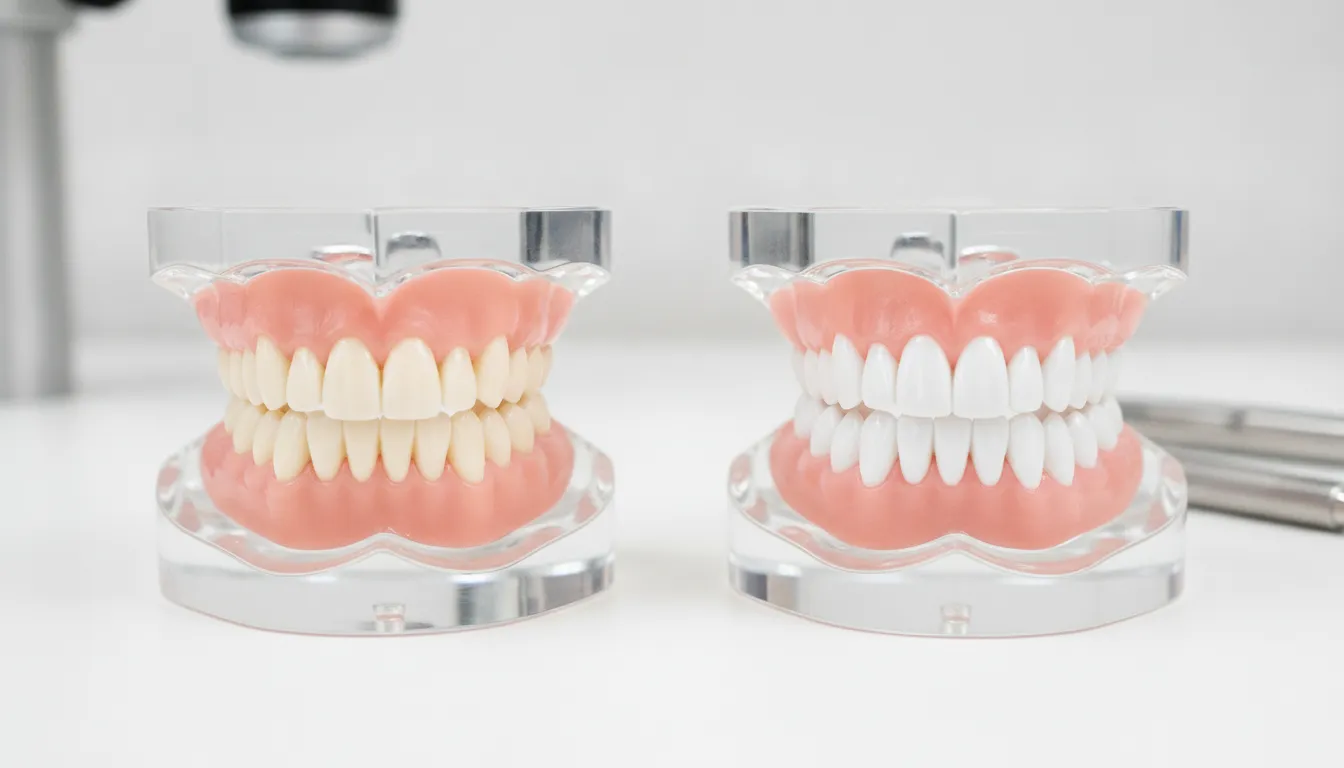
| Material | Longevity | Look | Cost vibe | Best for |
|---|---|---|---|---|
| Porcelain | Generally the longer-lasting option; ceramic veneers showed 100% cumulative 10-year survival in the cited study. | Stable, natural-looking color that is less likely to change than composite resin. | Usually the higher initial investment because the restorations are custom fabricated. | Patients seeking durable cosmetic refinement, consistent shade, and a highly planned smile design. |
| Composite resin | May require maintenance or replacement sooner; indirect resin composite veneers showed 75% cumulative 10-year survival in the cited study. | Can create an attractive result, but color match and stability may be less favorable over time. | Often the more accessible initial option, although future repairs or replacement should be considered. | Patients with mild cosmetic concerns who may benefit from a more conservative restorative approach. |
Porcelain is often considered when color stability and long-term predictability are priorities. Its appearance can be carefully planned to complement your facial features, existing teeth, and overall smile. It may be especially appealing if you have discoloration that does not respond well to whitening or want several teeth to maintain a consistent shade. Porcelain is not a repair for a weakened tooth, however. Veneers cover the front surface for cosmetic purposes, while a crown covers the entire tooth to add strength and protection. Your dentist should evaluate whether a veneer or another restoration is appropriate.
Composite can be useful for mild chips, shape concerns, or limited changes where a patient wants to improve the smile without choosing porcelain. Because composite is shaped directly on the tooth, treatment planning may allow more flexibility. It can also be easier to repair if a small area chips. The tradeoff is that composite is more vulnerable to changes in color and surface characteristics over time, particularly with staining foods, drinks, and tobacco exposure. Good brushing, flossing, professional care, and attention to clenching or grinding remain important with either material.
Material selection should be based on diagnosis, not just a price comparison. To understand how veneers fit within a broader treatment plan, read about porcelain veneers vs smile makeover. A specialist can assess your enamel, bite, gum health, and desired outcome before recommending the most appropriate path.
Veneer treatment is planned around the health, proportions, and appearance of your natural teeth. A porcelain veneer covers only the front surface of a tooth to improve its appearance. A crown covers the entire tooth structure and is used when a tooth needs greater strength and protection. That distinction matters because veneers are a cosmetic treatment, not a substitute for repairing a badly damaged tooth. Learn more about how veneers differ from crowns.
At Advanced Cosmetic and Implant Dentistry, treatment is guided by a board-certified prosthodontist, a specialist with advanced training in the design, function, and appearance of complex restorations. The practice's in-house laboratory also allows the doctor and laboratory team to communicate closely while your veneers are being designed and refined.
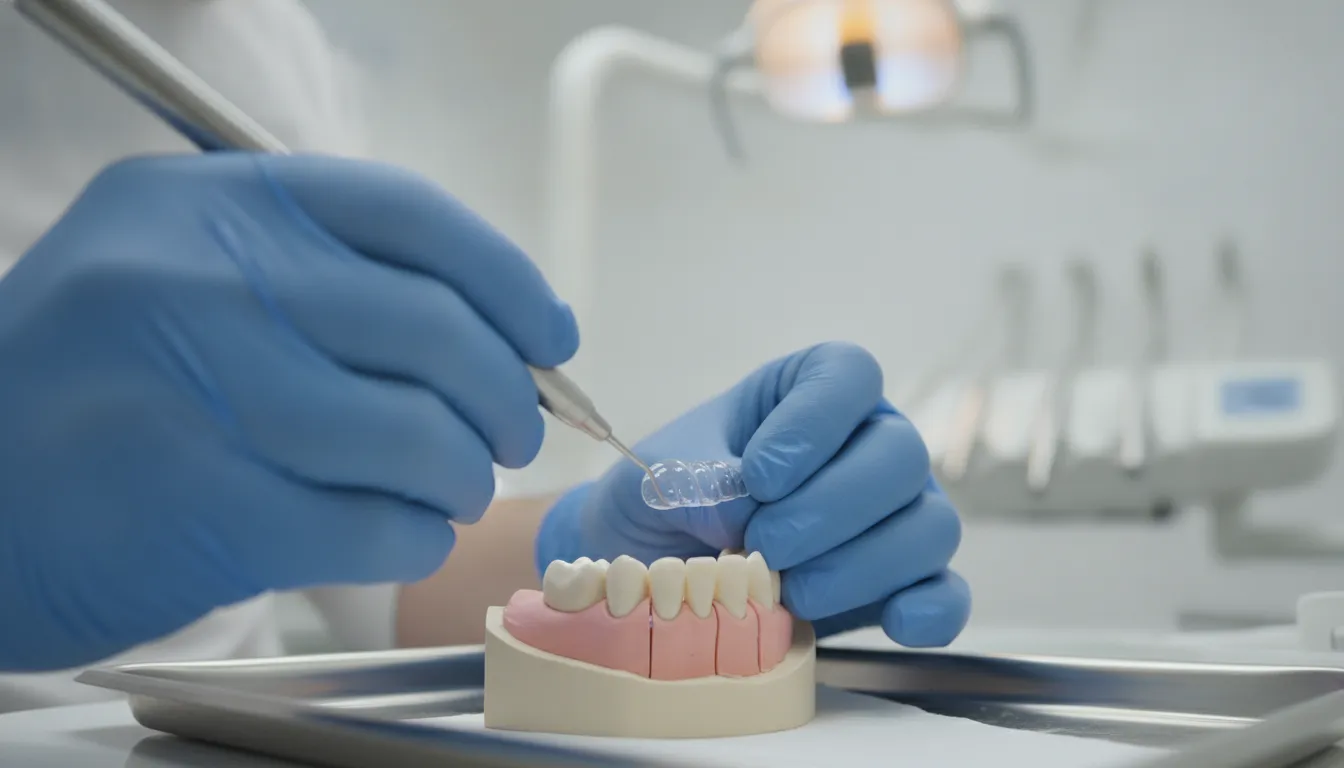
Explore specialist restorative and cosmetic care at Advanced Cosmetic and Implant Dentistry
The exact number and timing of visits varies with the material, number of veneers, preparation needs, and complexity of the smile design. A detailed consultation gives you a clear sequence for your treatment rather than a one-size-fits-all timeline.
Veneers are designed to provide a durable cosmetic improvement, but they are not considered a lifetime restoration. In general, porcelain veneers may last about 10 to 15 years, while composite veneers often last about 5 to 7 years. These are useful planning ranges, not guarantees. The material selected, your bite, daily habits, oral hygiene, and the condition of the supporting teeth all influence how long your result remains healthy and attractive.
Material is one of the clearest differences in veneer longevity. A clinical study reported a 10-year survival rate of 100% for ceramic veneers compared with 75% for indirect resin composite veneers. In that study, the composite group experienced failures related to debonding and fracture. Which illustrates why a careful evaluation of your bite and treatment goals matters before choosing a material. Read the published veneer survival study.
Porcelain also tends to maintain its color more reliably over time. Research found that color matching was significantly less favorable among surviving composite laminate veneers than among ceramic veneers. Composite can still be a practical option for mild cosmetic concerns. Particularly when a patient values a more conservative or potentially easier-to-repair approach, but it may require maintenance or replacement sooner.
Veneers cover the visible front surface of a tooth, so the natural tooth and the surrounding gum tissue still require consistent care. Brush twice daily with a soft-bristled toothbrush, clean between your teeth, and attend regular examinations and professional cleanings. Good home care helps reduce the risk of decay or gum inflammation around the edges of the restoration. Veneers are cosmetic restorations, not a substitute for healthy teeth and gums.
It is also wise to avoid using veneered teeth to bite hard objects such as ice, pens, fingernails, or packaging. Even durable porcelain can chip or fracture under unnecessary force. If you clench or grind your teeth, tell your prosthodontist before treatment. Unmanaged grinding can place excessive pressure on veneers and may call for a customized nightguard or another strategy to protect your smile.
A veneer may eventually need repair or replacement because of wear, fracture, debonding, changes in the supporting tooth, or dissatisfaction with its appearance. A replacement is not necessarily a sign that treatment failed. It is part of planning for a restoration that is exposed to years of chewing forces and changing oral conditions. During routine visits, your dental team can monitor the margins, bite, gums, and neighboring teeth so concerns are identified early.
The right question is not simply how long veneers last, but which material and design are appropriate for your teeth and habits. A comprehensive consultation can help you compare expected longevity, maintenance, appearance, and alternatives before treatment begins.
Veneers are designed for people who want to improve the appearance of otherwise functional teeth. They may be appropriate when the main concern is cosmetic, such as small chips. Deep or persistent stains, minor differences in tooth shape, slightly uneven edges, or enamel that has become visibly worn. They can also camouflage a diastema, the space or gap between teeth, and misshapen teeth when the desired change is primarily visual. The Cleveland Clinic describes veneers as custom-made shells that cover the front surfaces of teeth to conceal cosmetic imperfections.
A strong candidate generally has healthy teeth and gums, practices consistent oral hygiene, and understands what veneers can and cannot do. The teeth receiving veneers need enough healthy structure to support the restorations, while the surrounding gums should be free of active inflammation. Good daily brushing, flossing, and professional preventive care also matter because veneers do not replace the need to maintain the natural teeth beneath and around them.
It is also important to have a specific, realistic cosmetic goal. Veneers may be considered for:
For patients wondering whether can veneers fix crooked teeth, the answer depends on the extent and cause of the misalignment. Veneers can sometimes create the appearance of improved alignment when the changes are mild. They are not a substitute for orthodontic treatment when teeth are significantly rotated, crowded, or poorly positioned.
Veneers are cosmetic restorations, not a way to hide active disease. Patients with extensive tooth decay or gum disease may not be suitable candidates until those conditions have been treated. The Cleveland Clinic recommends addressing serious oral health problems before exploring cosmetic treatment. A careful evaluation may also identify weakened teeth, an unstable bite, or habits such as forceful clenching that need attention before veneer planning.
At Advanced Cosmetic and Implant Dentistry, a board-certified prosthodontist evaluates your teeth, gums, bite, smile proportions, and goals before recommending treatment. That assessment helps determine whether veneers are appropriate or whether whitening, bonding, orthodontics, periodontal care, or another restorative option would provide a safer and more predictable result. The goal is not simply to place veneers. But to choose an approach that fits your oral health and the way you want your smile to look and function.
Veneers are among the most common cosmetic dentistry treatments because they can create a noticeable change without covering the entire tooth. These custom-made shells can conceal chips, cracks, stains, and other visible irregularities on the front teeth. For the right patient, they can make the smile look more even and balanced while preserving more natural tooth structure than a crown typically requires.
If you are weighing the benefits against the long-term commitment, read more about are veneers safe for your teeth. A careful evaluation should consider your enamel, bite, gum health, cosmetic goals, and whether a veneer is appropriate for each tooth. Veneers are cosmetic restorations, not a substitute for treating decay, gum disease, or a tooth that needs structural repair.
Schedule a consultation to discuss whether veneers are right for your smile.
Porcelain veneers commonly last about 10 to 15 years, while composite resin veneers often last about 5 to 7 years. Actual longevity depends on material, placement, bite forces, oral hygiene, and habits such as chewing ice or using your teeth as tools. A 10-year study reported higher survival for ceramic veneers than indirect resin composite veneers, supporting the importance of material selection and maintenance. Review the study.
The main options are porcelain and composite resin veneers. Porcelain is generally valued for color stability and a natural appearance, while composite can be useful for addressing milder cosmetic concerns and may be completed more directly. No-prep and removable veneers are also terms you may hear, but whether either option is appropriate depends on your teeth, bite, and treatment goals.
Most traditional veneers require removing a small amount of enamel so the restoration can fit naturally and bond securely. Because this change is usually irreversible, the decision should follow a careful examination and treatment plan. Some cases may be considered for minimal-preparation or no-prep approaches, but those are not suitable for every tooth or smile.
Veneers may help camouflage chips, stains, gaps, or misshapen teeth, but they are cosmetic restorations rather than a substitute for treating disease. Extensive tooth decay or gum disease should be addressed before cosmetic treatment. A clinician must also assess enamel, bite forces, tooth position, and your expectations before recommending veneers. Learn more about candidacy.
A personalized consultation can help you understand which veneer option best fits your smile goals, dental health, and preferences. The prosthodontists at Advanced Cosmetic and Implant Dentistry can answer your questions and discuss an appropriate treatment plan. Schedule a veneer consultation with the Glastonbury team to take the next step.
Patients in Hartford, CT, can experience unmatched quality and value by choosing board-certified doctors Avinash Bidra and Xiao Chun Li.
We are affiliated with the following prestigious organizations: