When you search for dental implants cost, you may hope to find one simple number. A headline price can be misleading. Replacing one tooth is not the same treatment as rebuilding a full arch. The complete fee reflects your mouth and jaw, the number of teeth involved, the restoration design, materials, and care before and after treatment.
Contact Advanced Cosmetic and Implant Dentistry about your dental implant questions.
Dental implant treatment planning starts with understanding the full sequence, not just the surgical appointment.
This guide explains each part of an implant estimate. It also shows how to compare value rather than price alone. You will learn how bone grafting, implant systems, specialist expertise, location, insurance, and financing can affect the plan. An examination and appropriate imaging are needed before a clinician can provide an individualized recommendation.
Dental implants cost depends on the number of teeth being replaced, jawbone health, preparatory procedures, implant and restoration materials, diagnostic planning, specialist expertise, office location, and follow-up care. An examination and diagnostic workup show which factors apply to your case.
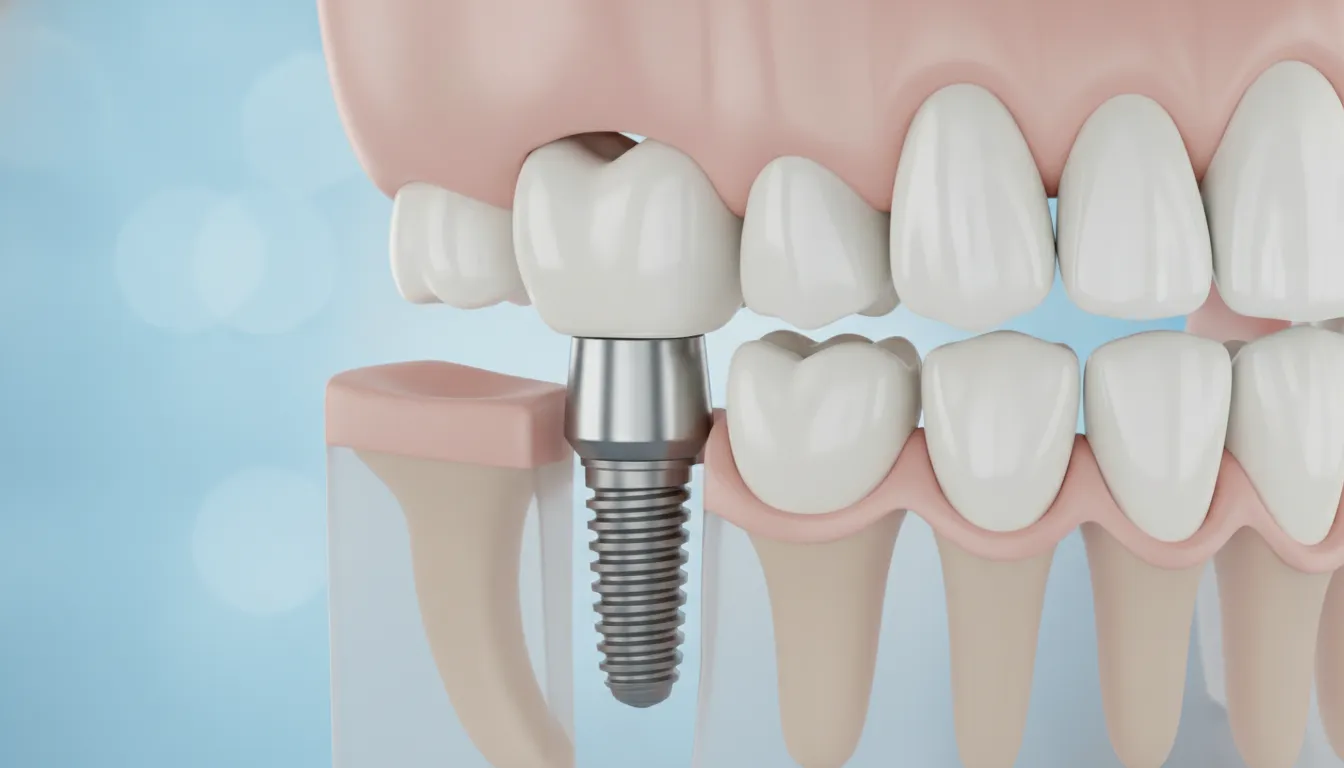
An implant restoration is a complete treatment, not only a post placed in the jaw. The implant replaces the root. An abutment connects it to the visible restoration. A custom crown, bridge, implant-supported denture, or full-arch prosthesis restores appearance and function. Examination, imaging, surgery, laboratory work, temporary teeth, healing visits, and maintenance may also be part of the plan.
A useful estimate identifies each phase instead of presenting implant placement as the entire treatment. Ask whether the written plan includes:
The American Dental Association explains that implant treatment can vary with factors such as the number of implants, complexity, materials, and provider experience. Those factors are why two estimates can differ without either one being misleading.
The number of implants affects dental implants cost because it changes the surgery, planning, and restoration design. Bone grafting can add a separate treatment phase when the jaw does not provide enough support for predictable implant placement. Neither factor can be determined accurately without an examination and imaging.
One missing tooth may be replaced with one implant and a custom crown. Several adjacent teeth may be replaced with an implant-supported bridge. A full-arch restoration follows a different design, because the prosthesis must distribute chewing forces across a carefully planned group of implants. The number of implants is therefore only one part of the decision. The final restoration and the way it will function also guide the plan.
Bone volume and quality matter because an implant needs a stable foundation for healing and integration. If bone is too thin or soft, grafting may be recommended before or during implant treatment. The Mayo Clinic describes bone grafting as a possible preparation when the jawbone is not sufficient. Grafting is not automatic. The recommendation should follow diagnostic findings and a discussion of alternatives.
For full-arch cases, a temporary restoration can help the clinical team assess speech, comfort, bite, and appearance during healing. The final prosthesis can then be designed with information gained from that phase. Ask for a written outline showing each stage, what it includes, and its expected timing.
Implant brands and materials can affect dental implants cost through component design, research history, restorative options, laboratory requirements, and long-term availability of compatible parts. Brand recognition alone does not make one system right for every patient. The choice should match your anatomy, restoration, clinical goals, and the provider's experience.
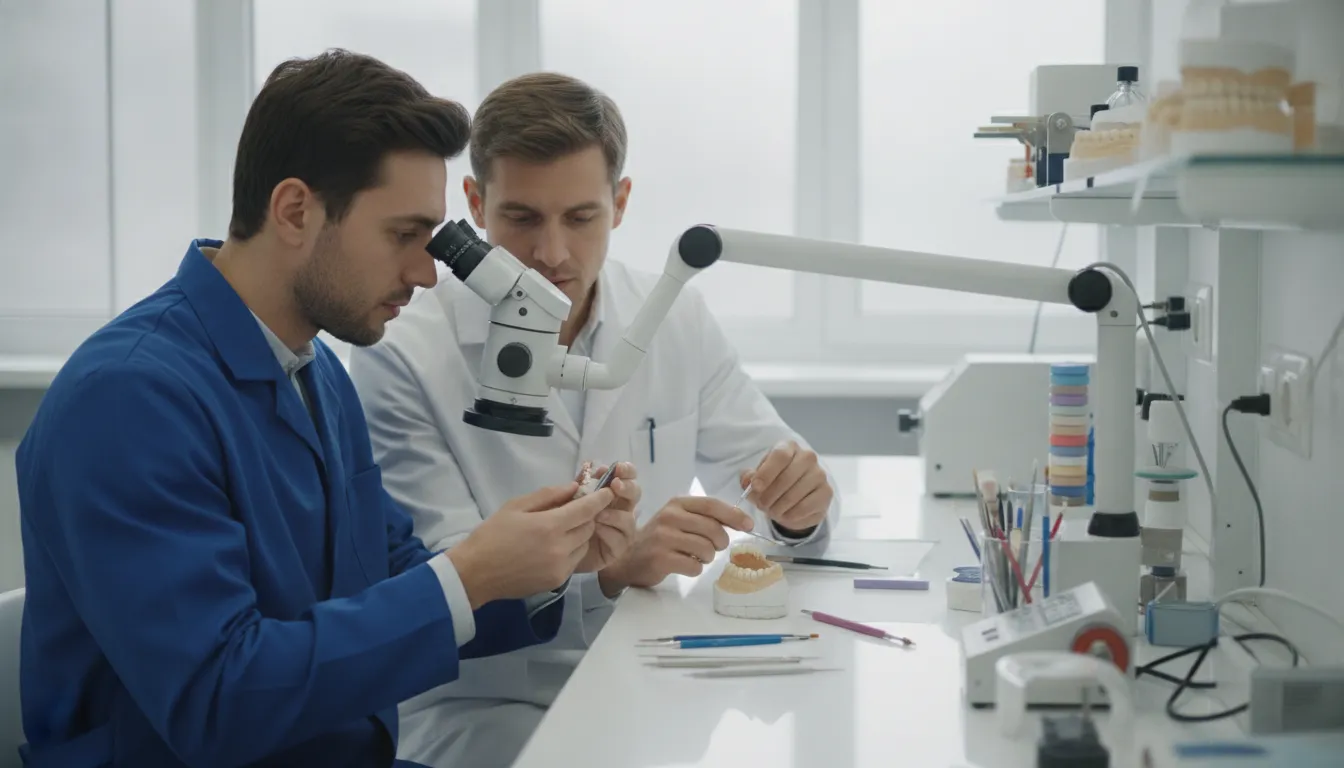
Nobel Biocare and Straumann are established implant systems used in implant dentistry. Different systems may offer different component designs, surface treatments, restorative connections, and laboratory workflows. These distinctions can influence the treatment plan, but a brand name is not a substitute for diagnosis.
The visible restoration matters as well. A crown, bridge, or full-arch prosthesis must be designed for the patient's bite, smile, speech, cleaning ability, and surrounding tissues. Titanium and zirconia have different physical and clinical characteristics. Material selection should be explained in the context of the treatment site and the patient's goals.
When comparing brands, ask:
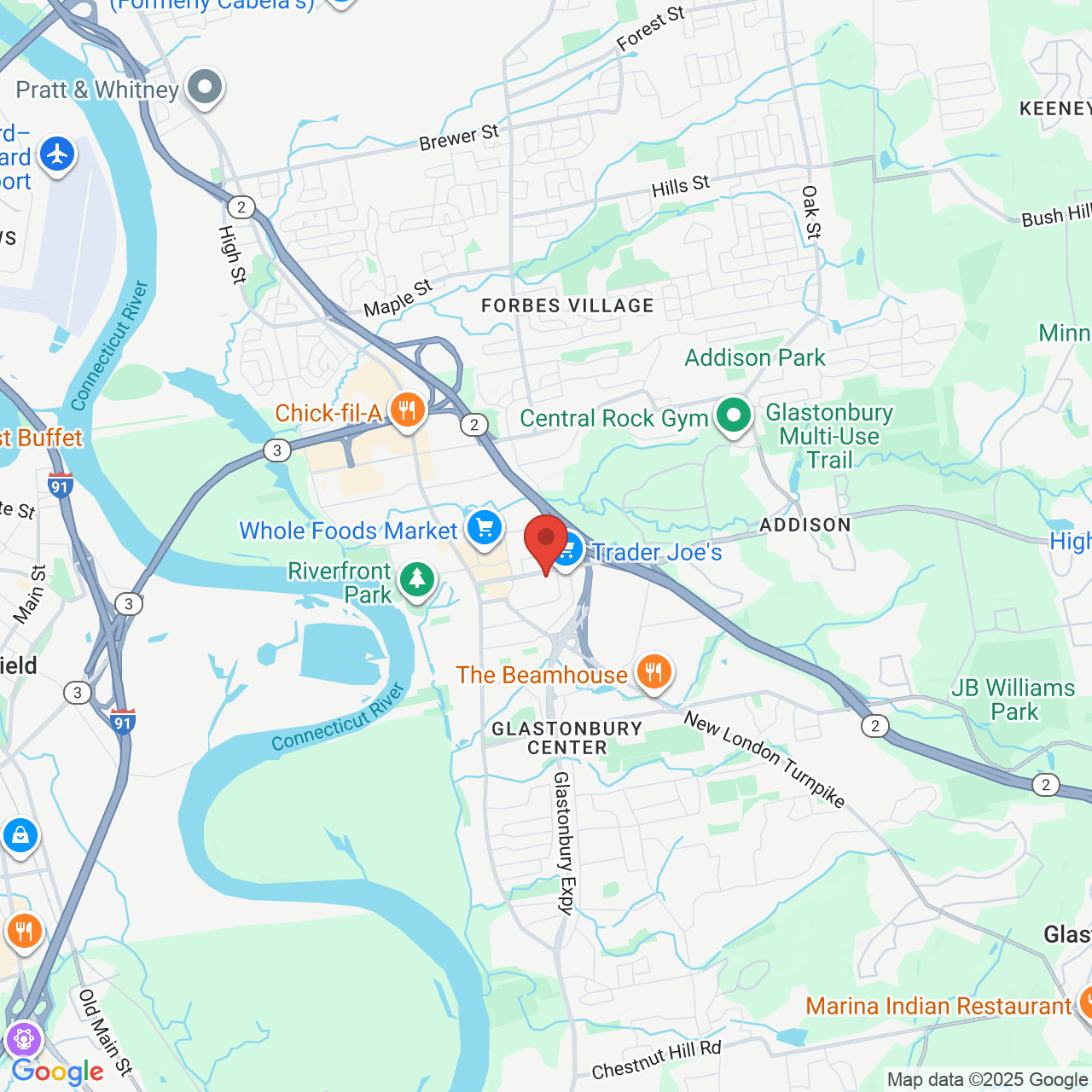
Learn more about dental implant treatment and planning at Advanced Cosmetic and Implant Dentistry. A complete treatment plan connects implant placement with the final teeth, which is especially important when several implants support one restoration. Patients comparing fees can also review the practice's dental implant cost information and its Glastonbury office information.
Prosthodontist expertise can affect dental implants cost because complex treatment requires coordination between implant placement, bite design, aesthetics, temporary teeth, and the final restoration. Advanced training may be particularly relevant when a patient has multiple missing teeth, a changed bite, extensive wear, or demanding full-arch goals.
Prosthodontists complete additional postgraduate training focused on restoring and replacing teeth. They plan the final result and work backward to determine how implant positions, components, temporaries, and laboratory procedures should support it. This restorative perspective can help keep the surgical and prosthetic phases connected.
Specialist care may also include digital records, three-dimensional planning, an in-house laboratory, and a coordinated sequence of visits. Those services may influence the initial investment. Their value should be assessed by how they contribute to a clear, maintainable plan, not by whether a brochure lists a technology.
Advanced Cosmetic and Implant Dentistry is a family-owned specialty practice in Glastonbury, Connecticut. The practice describes a one-doctor, one-office model with surgical, prosthetic, and laboratory coordination in one setting. Dr. Avinash S. Bidra is a board-certified prosthodontist and a Fellow of the American College of Prosthodontists. The practice is also identified in its materials as a Nobel Biocare All-on-4 Center of Excellence.
When comparing providers, ask who is responsible for the complete plan, who performs each phase, how the final restoration is made, and who handles follow-up. Those answers help you compare the care behind the fee.
Location can influence dental implants cost because practices face different overhead, staffing, laboratory, facility, and operating expenses. Geography should be only one part of the comparison. The scope of care, provider expertise, materials, diagnostics, and follow-up may matter just as much.
Two offices in different cities may quote different totals while including different services. One estimate may include imaging, sedation, temporaries, laboratory work, and adjustments. Another may list only implant placement. Comparing totals without comparing inclusions can create a false sense of savings.
| Care factor | Question to ask | Why it matters |
|---|---|---|
| Diagnostics | Are examination and appropriate three-dimensional images included? | Planning must account for anatomy and the intended restoration. |
| Materials | Which implant and restoration systems are proposed? | Components and laboratory processes are part of complete treatment. |
| Provider | Who coordinates surgery and the final teeth? | Complex cases need a clear clinical owner. |
| Follow-up | How are healing checks, adjustments, and maintenance handled? | Care continues after implant placement. |
Travel has practical costs too. Healing checks, adjustments, and urgent concerns may be harder to manage when the office is far away. Before selecting a provider, request a written estimate and ask how the practice handles every stage from planning through maintenance. Patients considering full-arch care can also review the practice's All-on-4 dental implant treatment information.
Dental implants may provide meaningful long-term value when they offer a stable, maintainable replacement that fits the patient's health, anatomy, and goals. Value is not the same as the lowest initial fee. It includes planning quality, the complete restoration, expected maintenance, and the ability to care for the result.
An implant replaces the root of a missing tooth and supports a custom restoration. During osseointegration, bone heals around the implant. This process creates a stable foundation, but it also means treatment may involve healing time, temporary teeth, and several visits.
Maintenance belongs in the financial discussion. Implants do not decay like natural teeth, but the surrounding gums and bone remain biological tissues. Daily home care and regular professional monitoring are important. Components or restorations may eventually require repair or replacement, and no provider can guarantee that additional treatment will never be needed.
Implant-supported treatment is not right for every patient. Bone health, medical conditions, smoking, cleaning ability, the condition of neighboring teeth, and the patient's goals all matter. A consultation should explain alternatives when they are appropriate, including conventional bridges or removable options.
Rather than asking only for the lowest dental implants cost, ask which plan provides a sound and maintainable solution for your situation. The clinical literature indexed by PubMed discusses factors relevant to implant outcomes and long-term care.
Review the dental implant service options before comparing treatment estimates.
Insurance and financing should be reviewed after the treatment plan identifies every phase of care. Dental plans may cover some services while excluding implants, limiting benefits, or applying deductibles, waiting periods, and annual maximums. Financing can divide eligible fees into scheduled payments, subject to the lender's terms.
Do not assume that a general insurance estimate is your final responsibility. Ask the insurer for a written explanation of benefits and confirm whether the policy treats the implant, abutment, crown, bone grafting, imaging, sedation, and temporary restoration differently. Coverage can vary by plan.
Advanced Cosmetic and Implant Dentistry identifies financing options including CareCredit, Cherry, and Proceed Finance in its practice materials. Availability and terms can change. Ask the practice and lender for current information rather than relying on an old promotion or assumed approval.
A complete plan may include examination, imaging, implant placement, abutments, a crown or other restoration, temporary teeth, laboratory work, healing visits, adjustments, and maintenance guidance. The exact inclusions vary by treatment. Ask for a written estimate that separates each phase.
Some dental plans cover a portion of implant-related services, while others exclude implants or limit coverage. Deductibles, waiting periods, annual maximums, and alternate-benefit rules may apply. Confirm the details with your insurer after receiving a treatment plan.
No. Bone grafting is recommended only when examination and imaging show that the available jawbone needs additional support or volume. Some patients can proceed without grafting. Your clinician should explain the finding, the reason for the recommendation, and how it changes the sequence.
A premium brand is not automatically the right choice for every patient. Discuss the system's components, research, restorative options, long-term availability, and fit with your anatomy and treatment goals. The clinician's experience and the quality of the complete restoration also matter.
Compare the treatment scope, number of implants, diagnostics, preparatory procedures, implant and restoration materials, temporary teeth, laboratory work, sedation, follow-up, and maintenance. A lower total may omit services included in another plan. Ask each provider to explain the complete sequence.
Request an individualized dental implant evaluation and written treatment discussion.
Patients in Hartford, CT, can experience unmatched quality and value by choosing board-certified doctors Avinash Bidra and Xiao Chun Li.
We are affiliated with the following prestigious organizations: