When most or all teeth are missing, the hardest part is often understanding how the choices differ. A removable denture, an implant-retained denture, staged implants, and a fixed full-arch restoration can all replace teeth. Each involves different surgery, stability, maintenance, and daily responsibility.
Complete tooth replacement may include conventional dentures, removable teeth supported by implants, staged implants, and fixed full-arch solutions such as All-on-4. The right direction depends on your remaining teeth, jawbone and gum health, medical history, and goals. It also depends on your hygiene routine and comfort with removable or fixed teeth. An examination and 3D imaging help identify realistic options for your anatomy and timeline.
The most useful first step is to define what replacing all missing teeth actually involves, from visible tooth replacement to the support, fit, healing, and long-term care behind it.
Contact ACAID to discuss your complete tooth replacement options.
Complete tooth replacement is not one procedure or one type of prosthesis. It is a treatment plan for replacing many or all missing teeth. The plan also considers the gums, jawbone, bite, appearance, and daily function. It may involve conventional dentures, implant-supported removable dentures, individual or staged implants, a fixed full-arch restoration, or a combination.
A person with several healthy teeth may need a different plan from someone whose remaining teeth are loose, severely damaged, or affected by advanced gum disease. Some teeth may be preserved and restored. Others may need removal before replacement can begin. The goal is not simply to fill visible spaces. It is to create a stable, cleanable relationship between replacement teeth and their supporting structures.
Conventional dentures for tooth loss replace visible teeth but remain removable. They may rely on fit, suction, and sometimes adhesive. Implant treatment takes a different approach. Dental implants replace tooth roots with posts that can support artificial teeth, and the type of implant treatment and the condition of the jawbone help determine how surgery is performed. Mayo Clinic explains the role of implants and jawbone condition.
Planning considers bone volume, gum health, remaining tooth roots, and the way your upper and lower teeth meet. A CBCT or other 3D image can help evaluate the jawbone and important anatomy. Medical history is also important. Conditions that affect healing, tobacco use, medications, and your hygiene routine may influence whether implant treatment is appropriate now or later. Additional preparation may be needed. If implants are being considered, you also need to be comfortable with healing that may take several months.
Your preferences are equally relevant. Some patients value a removable prosthesis that can be taken out for cleaning. Others prefer teeth that remain in place. Fixed restorations still require careful home care and professional maintenance. Tolerance for surgery, dental anxiety, speech, chewing goals, appearance, schedule, and follow-up visits all belong in the conversation.
At Advanced Cosmetic and Implant Dentistry, complete tooth replacement planning begins with an examination, imaging, medical-history review, and discussion of your goals. The evaluation helps distinguish what is technically possible from what is practical for your health, habits, and expectations.
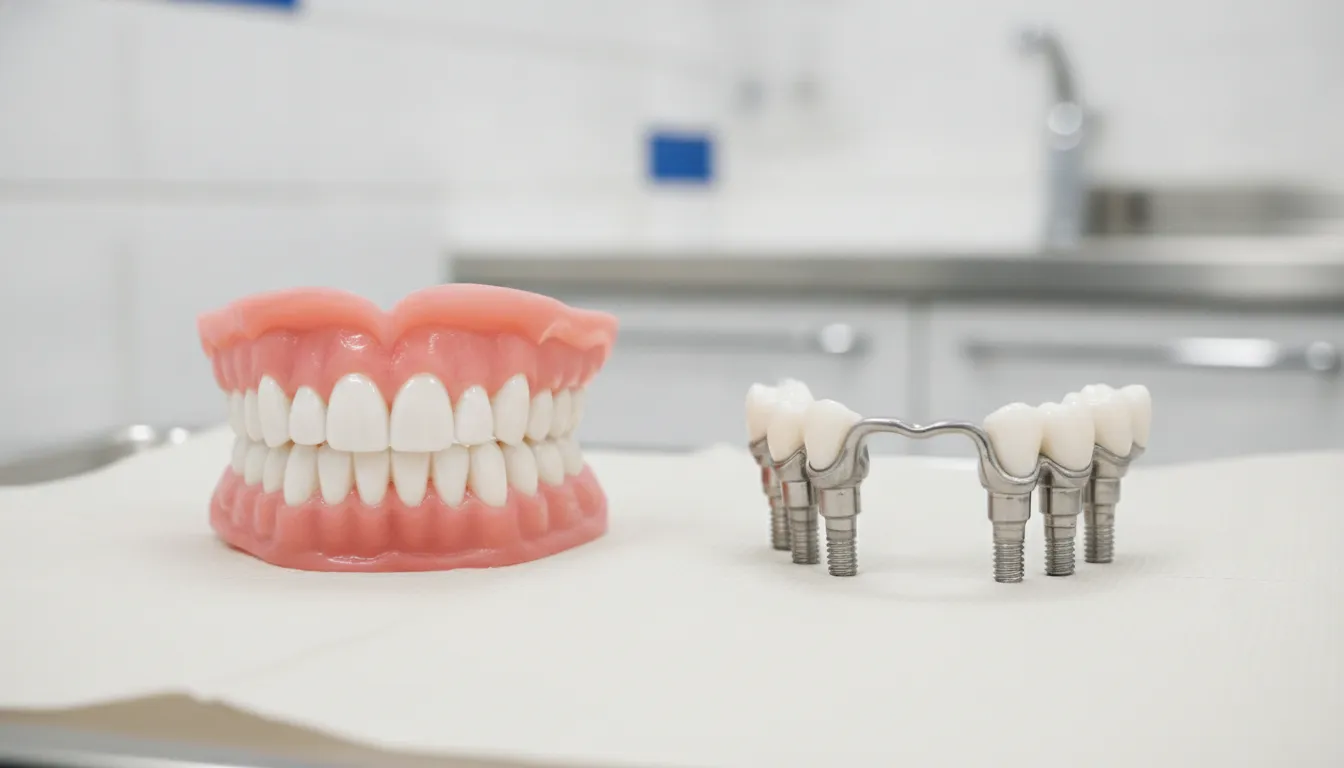
Both conventional dentures and implant-supported removable dentures can be taken out by the patient. The important difference is how they stay in place. A conventional denture rests on the gums and may depend on its fit, natural suction, or adhesive. An implant-supported removable denture connects to dental implants, which provide additional retention while still allowing the prosthesis to be removed for daily cleaning.
With conventional dentures, changes in the gums and jaw over time can affect the fit. Movement may make speaking or eating less comfortable for some patients, although a carefully designed and maintained denture can remain a useful complete tooth replacement. Implant-supported options use attachments connected to implants in the jaw. Those attachments help limit slipping and improve stability, but they do not turn the denture into a fixed bridge. The patient or dental professional can still remove it, depending on the design.
To learn more about this approach, see our implant-supported removable dentures guide.
| Consideration | Conventional dentures | Implant-supported removable dentures |
|---|---|---|
| Retention | Rely on denture fit, gum support, suction, and sometimes adhesive. | Use implant attachments for added retention, which may reduce movement. |
| Surgery | Does not require implant placement surgery. | Requires implant surgery and healing around the implants before or during final planning. |
| Removability | Removed by the patient for cleaning and rest. | Also removable, even though implants improve retention during use. |
| Maintenance | Clean the denture and the mouth regularly, with periodic fit checks. | Clean the prosthesis, attachments, gums, and implant areas, with professional maintenance. |
| Candidacy | Depends on oral anatomy, tissue health, fit, comfort, and the patient's goals. | Also depends on adequate bone or grafting options, healthy tissues, medical history, smoking status, and willingness to complete healing and maintenance. |
Neither option is maintenance-free. A removable prosthesis should be cleaned as directed, and the mouth should be examined regularly. Implant-supported dentures require particular attention around the implants and connecting components because inflammation or accumulated debris can affect comfort and long-term function. The design also matters: attachment systems, the number and position of implants, and the condition of the supporting tissues influence the cleaning routine.
Implant treatment adds surgery and a healing period. Bone must heal closely around the implants to provide support, so the overall process can take several months. Candidacy is determined through an examination, imaging, and review of medical history rather than by tooth loss alone. A prosthodontic evaluation can clarify whether conventional dentures, an implant-supported removable design, or another option best fits the patient's anatomy, health, function, and preferences.
Replacing several missing teeth does not always require treating an entire arch at once. Single or staged dental implants may make sense when the missing teeth are separated by healthy teeth, located in a few strategic areas, or best restored in carefully planned phases. The goal is to rebuild function and appearance while preserving as much healthy tooth structure and bone as possible.
A single implant uses a small implant post in the jawbone to replace the root of one missing tooth. After the surrounding bone heals around the post, a connector and custom crown can be attached. When several teeth are missing, implants may also support a bridge, reducing the need for a separate implant at every missing-tooth location. The appropriate design depends on the spacing of the teeth, the condition of the adjacent teeth, the available bone, and the planned bite.
This approach can be useful when a patient has several missing teeth but does not need a full-arch bridge. It differs from a full-arch treatment, which is designed to support a complete row of replacement teeth on a smaller number of strategically placed implants. A staged plan instead addresses selected gaps or regions, sometimes allowing the patient and restorative team to evaluate healing and function before moving to the next phase.
Implants need time for osseointegration, the process in which bone heals tightly around the implant and helps provide support. Because that healing takes time, treatment may extend over several months. Some patients receive a temporary tooth or provisional restoration during healing, depending on the location, stability of the implant, and overall restorative plan. The final crown, bridge, or denture attachment is placed only after the clinical team determines that the site is ready.
Before recommending single or staged treatment, the team evaluates bone volume, gum health, bite, adjacent teeth, and any infection or active dental disease. Medical history, smoking, and conditions that affect bone healing also matter. CBCT or other three-dimensional imaging may help show the anatomy that cannot be assessed from a routine visual exam alone. If bone or gum support is limited, additional treatment may be considered before or during implant care.
Patients considering dental implants for missing teeth should also understand the maintenance commitment. Implant crowns and bridges do not decay like natural teeth, but the surrounding gums and bone still require daily cleaning and professional monitoring. A staged plan may be a thoughtful option when replacement needs are distributed, adjacent teeth can be preserved, and treatment can be coordinated around healing, function, and long-term maintenance.
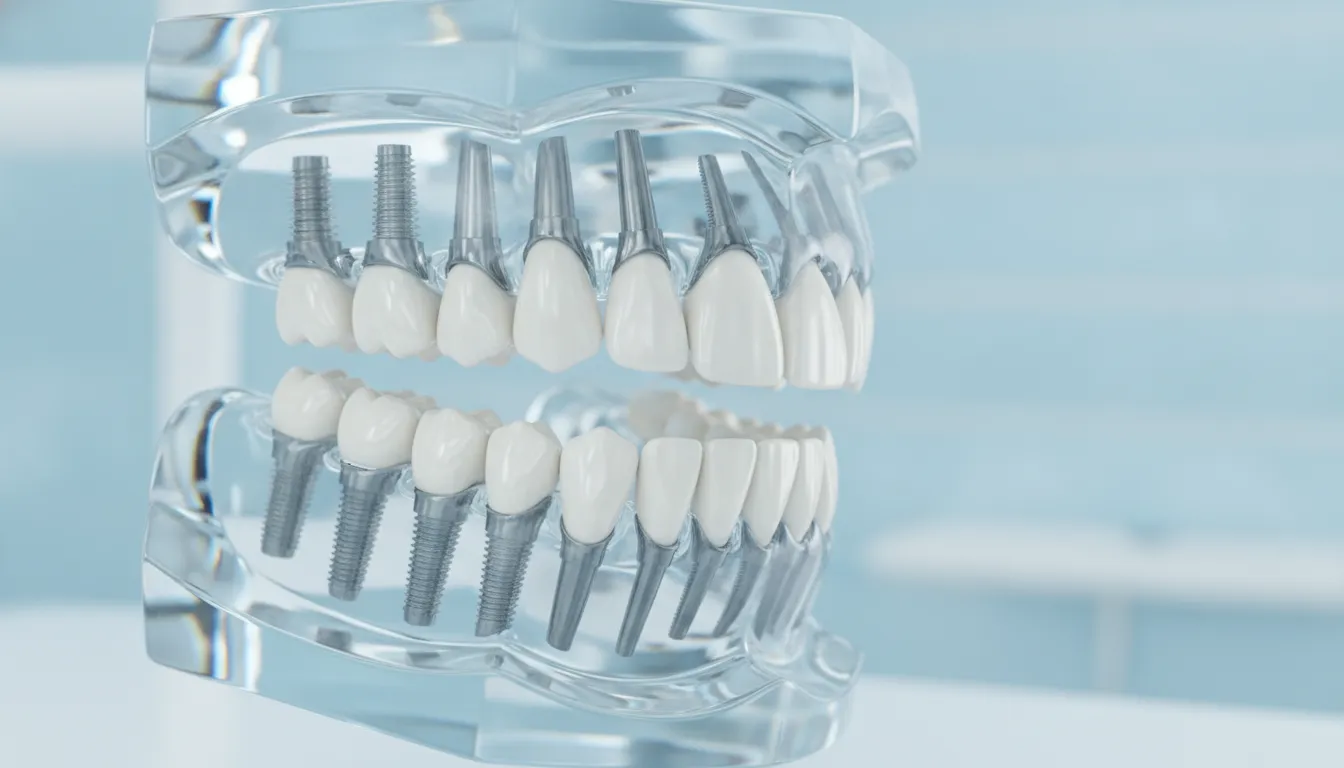
Fixed full-arch treatment is designed for people who need to replace most or all teeth with a restoration that is secured to dental implants. Unlike a conventional denture, a fixed bridge is not intended to be removed by the patient each night. The implants support the replacement teeth, while the restoration is cleaned in place with the tools and techniques recommended by the dental team.
An All-on-4 approach commonly uses four or more implants in an arch. In selected patients, angled placement of the posterior implants may make better use of available bone and reduce the need for grafting in many cases. This is not a promise that grafting will be unnecessary. Bone volume, gum health, bite forces, medical history, and the location of important anatomy all have to be evaluated before a plan is chosen.
A detailed evaluation may include an examination, CBCT or other 3D imaging, digital impressions, and a review of your medical history. Smoking and health conditions that affect bone healing can influence candidacy, as can your ability to maintain daily hygiene and attend follow-up visits. The type and condition of the jawbone help guide how implant surgery is performed, and implant treatment requires time for bone to heal tightly around the implants. Mayo Clinic explains the role of bone healing and other candidacy considerations.
Fixed full-arch treatment may be a reasonable option for some patients who want a stable, non-removable restoration and can tolerate the surgical and maintenance commitments. It may not be appropriate for everyone. A removable implant-supported denture, staged implants, conventional dentures, or broader full-mouth reconstruction planning may provide a better fit for another patient's anatomy, health, goals, or budget.
In the All-on-4 sequence described by Advanced Cosmetic and Implant Dentistry, an acrylic or resin temporary bridge is placed during the healing period. Healing is approximately three to six months, although the precise timeline depends on the individual treatment plan and clinical progress. The temporary bridge allows the team to monitor function and make adjustments while the implants heal. It also provides an opportunity to refine tooth position, speech, bite relationships, and esthetic details before the more definitive restoration is fabricated.
After healing, the final bridge may be made from zirconia or another material selected for the plan. Finalization can involve new impressions, bite registration, custom fabrication, occlusal adjustment, and a maintenance plan. Moving directly from surgery to a definitive material without learning from the healing-phase prosthesis may remove an important opportunity to customize the result. The temporary-to-final sequence is therefore not a sign that treatment is incomplete or has failed. It is a deliberate way to test and refine the design, helping protect the patient's financial investment in a complex restoration.
Patients considering fixed full-arch All-on-4 treatment should ask how the temporary phase, hygiene routine, follow-up schedule, and final material fit their specific circumstances. The appropriate choice should follow an individualized examination rather than a universal recommendation.
A complete tooth replacement plan should be built around the patient, not around a single product or procedure. A prosthodontist evaluates the condition of the mouth, the health factors that influence healing, and the type of teeth the patient can comfortably maintain. The process may include the following steps.
Patients in Glastonbury, Greater Hartford, and throughout Connecticut may benefit from a coordinated evaluation when tooth loss is extensive or the treatment involves multiple disciplines. ACAID's practice model includes board-certified prosthodontic care, digital imaging, and in-house laboratory support. The team also describes final planning with impressions, bite registration, custom fabrication, occlusal adjustment, and long-term maintenance planning.
For patients with several damaged or missing teeth, full-mouth reconstruction planning may provide a useful framework for discussing how individual treatments fit together. The result of the evaluation may be a removable solution, a fixed solution, staged care, or a plan that preserves selected natural teeth. The important outcome is a clear explanation of why the recommendation fits your anatomy, health, goals, and ability to maintain it.
Contact ACAID to discuss your complete tooth replacement options.
Yes, implants can support either a fixed full-arch restoration or a removable implant-supported denture. Candidacy depends on factors such as jawbone volume, gum and overall health, smoking, hygiene ability, and your willingness to complete the healing process. An examination and 3D imaging are needed to determine which approach is appropriate. Mayo Clinic explains implant candidacy and treatment considerations.
Conventional dentures are removable and rely on fit, suction, and sometimes adhesive. An implant-supported removable denture uses implants to improve retention, but you still remove the prosthesis for cleaning. The better choice depends on your anatomy, oral health, goals, tolerance for surgery, and ability to maintain either type of prosthesis.
The timeline varies with the number of implants, bone condition, any required preparatory procedures, and the restoration plan. Bone must heal tightly around an implant before it can provide stable support, so implant treatment may take many months. Some full-arch plans use a temporary bridge during healing, followed by a definitive restoration after approximately three to six months, when appropriate. Mayo Clinic describes the role of bone healing in the implant timeline.
No. Fixed full-arch treatment may be a good fit for some patients, but it is not universal. Planning considers remaining teeth, bone volume, gum health, medical history, goals, hygiene, and tolerance for surgery. CBCT imaging, digital impressions, and a detailed restorative plan help identify whether a fixed, removable, staged, or conventional option better matches your needs. When a temporary bridge is used, it also allows adjustments before the definitive restoration.
Choosing among complete tooth replacement options is a clinical decision, not a contest between a removable denture and dental implants. Your recommendation should account for your remaining teeth, gums, jawbone, health history, goals, timeline, and ability to maintain the result.
Advanced Cosmetic and Implant Dentistry serves patients in Glastonbury, Greater Hartford, and throughout Connecticut with prosthodontic and implant treatment planning. Contact ACAID to schedule an individualized tooth replacement evaluation.
Patients in Hartford, CT, can experience unmatched quality and value by choosing board-certified doctors Avinash Bidra and Xiao Chun Li.
We are affiliated with the following prestigious organizations: