An implant supported prosthesis replaces missing teeth with a restoration held by dental implants rather than resting only on the gums. It may be designed as a removable overdenture that the patient takes out for cleaning. Or as a fixed full-arch restoration that stays in place and requires specialized access for hygiene. Neither design is automatically better for every patient. Jaw anatomy, oral health, dexterity, esthetic and speech goals, cleaning preferences, and long-term maintenance all shape the recommendation.
Contact ACAID to discuss your restorative options
The most useful comparison begins with how each restoration is supported and used in daily life. Understanding that foundation makes it easier to weigh retention, access for cleaning, materials, and the coordinated surgical and prosthetic planning involved.
An implant supported prosthesis is a custom replacement for missing teeth that uses dental implants for support and retention. Rather than resting only on the gums, the restoration connects to implants placed in the jaw. Depending on the treatment design, it may replace one tooth, several teeth, or an entire arch with a crown, bridge, or denture.
Dental implants are screwlike posts that replace some of the function of tooth roots. Once incorporated into the jaw, they can support artificial teeth and help hold the prosthesis in position. The prosthetic design is planned around practical goals such as contour, comfort, speech, appearance, chewing function, and oral health. You can learn more about the overall process through dental implant treatment.
A conventional denture depends primarily on its fit against the gums, along with natural suction, the shape of the mouth, and sometimes adhesive. An implant-supported denture or bridge uses attachments connected to implants instead. A removable design can still be taken out for cleaning. While a fixed full-arch restoration is designed to remain in place and is cleaned in the mouth using methods selected for that restoration.
That distinction does not make one approach universally better. Fixed and removable prostheses have different requirements for cleaning access, dexterity, maintenance, materials, and restorative design. The appropriate discussion also includes the condition of the jawbone and gums, oral health, speech and chewing goals, and the ability to maintain the restoration over time.
Implant surgery and prosthetic planning are closely connected. The number and position of implants, the shape of the replacement teeth, and the way the finished restoration will be accessed all influence the plan. A prosthodontic evaluation is needed to relate these general options to a particular patient rather than assuming that a familiar design will fit every situation.
A review of implant-supported prosthetic treatment describes implants as support and retention for replacement teeth while emphasizing coordinated surgical and restorative planning.
An implant-supported full-arch restoration may be designed for removal by the patient or for fixed support that is accessed by the dental team. Both approaches use implants to improve retention compared with conventional suction or adhesive, but the practical experience is different. The right comparison is not simply which design feels more advanced. It is how each option fits your anatomy, oral health, dexterity, cleaning preferences, goals, and long-term maintenance plan.
| Planning consideration | Removable implant overdenture | Fixed full-arch restoration |
|---|---|---|
| Retention | Attachments, including bar or ball-type designs, connect the denture to implants and help stabilize it during daily use. | The prosthesis is secured to implants and remains in place during ordinary eating, speaking, and social activities. |
| Removal | The patient can remove the restoration when instructed, which can make certain cleaning tasks and overnight routines more accessible. | The patient does not remove the restoration at home. Access for inspection, adjustment, or repair is planned with the dental team. |
| Cleaning access | Removing the prosthesis may allow direct access to its tissue-facing surfaces and the areas around the attachments. | Cleaning must be performed around and beneath the fixed restoration using techniques selected for its contours and implant positions. |
| Feel and function | It can provide implant-assisted stability while retaining the familiar removable character of a denture. The design and fit influence speech and chewing comfort. | It can provide a continuous, fixed tooth-replacement design. The shape, materials, bite, and support must be developed for the individual patient. |
| Repair and access | The restoration can be removed for evaluation, maintenance, or repair, although attachments and prosthetic components may still require professional care. | Repairs and maintenance generally require an appointment because the restoration is not patient-removable. |
| Typical planning questions | Can the patient manage removal and cleaning? Would removable access support hygiene, comfort, or future adjustments? | Can the patient maintain the design around its contours? Do anatomy, goals, speech, function, and restorative space support a fixed approach? |
ACAID offers denture treatment options as well as fixed All-on-4 restorations. Those labels describe broad treatment categories, not a recommendation for a particular person. A prosthodontic evaluation should connect the surgical plan with the proposed restoration, including its materials, contours, hygiene access, and expected maintenance. Discussing how each design would work with your daily routine is as important as reviewing the implant placement itself.
Both designs are supported by implants, but they ask you to care for the restoration in different ways. A fixed prosthesis remains attached in the mouth for daily use. A removable implant-supported denture is designed to be taken out by the patient, while its attachments help improve retention compared with conventional suction or adhesive retention.
With a fixed design, cleaning access is around and beneath the restoration rather than by removing the teeth. Your clinician may show you how to use tools suited to the contours of the prosthesis, such as specialized flossing aids or small interdental brushes. The exact technique depends on the design, tissue contours, and your ability to reach each area. A fixed restoration is not maintenance-free simply because it cannot be removed at home.
With a removable design, taking the prosthesis out can make it easier to inspect and clean the restoration and the areas around the attachments. That removability can also matter for someone whose dexterity, vision, or home-care routine makes cleaning beneath a fixed prosthesis more difficult. It requires a consistent process for cleaning the prosthesis, caring for the mouth, and replacing the restoration correctly. The image below illustrates the removable-restoration concept.
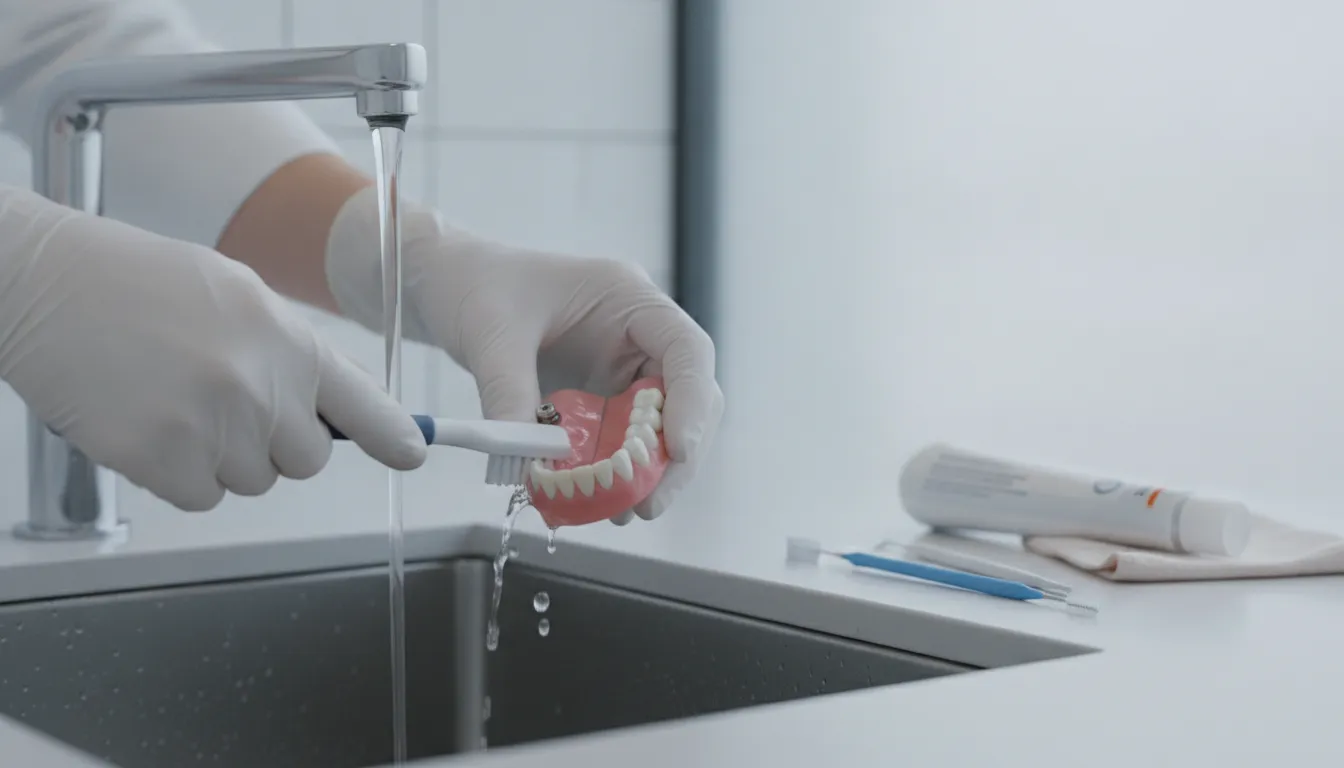
Retention is another practical difference. Attachments may hold a removable prosthesis in place during speaking and eating, but the restoration still comes out for care. Fixed and removable designs can both require professional maintenance, including evaluation of the implants, surrounding tissues, prosthetic components, and fit. Components can wear or need adjustment over time, so follow-up is part of the treatment plan.
Before choosing, review the day-to-day trade-offs with your prosthodontist. The implant-denture considerations may be useful as you compare access, retention, and maintenance. Brushing, flossing, and recall visits are commonly discussed, but instructions and recall schedules must be individualized to your restoration, oral health, dexterity, and clinical findings.
Planning begins with the relationship between the proposed teeth and the implants that will support them. A careful evaluation helps the clinical team consider function, comfort, speech, appearance, oral health, anatomy, and the practical demands of daily care. The surgical and prosthetic parts should be coordinated rather than designed as separate steps.
That sequence gives patients a framework for informed discussion while preserving the clinical judgment needed to select and refine a design.
Material selection is part of the prosthetic design conversation, not a contest to identify one universally superior material. An implant supported prosthesis may be removable or fixed, and the choice affects how the restoration is supported. How it is accessed for cleaning, and how it functions within the available space.
For a removable design, the restoration may be planned with an attachment approach such as a bar or ball-type connection. These designs can allow the patient or clinician to remove the prosthesis for access, while the implants provide retention beyond conventional suction or adhesive. A fixed full-arch restoration is designed to remain in place for daily use. ACAID offers both implant-supported dentures and full-arch restorations, including options such as All-on-4, All-on-6, and All-on-X protocols, when appropriate to the individual treatment plan.
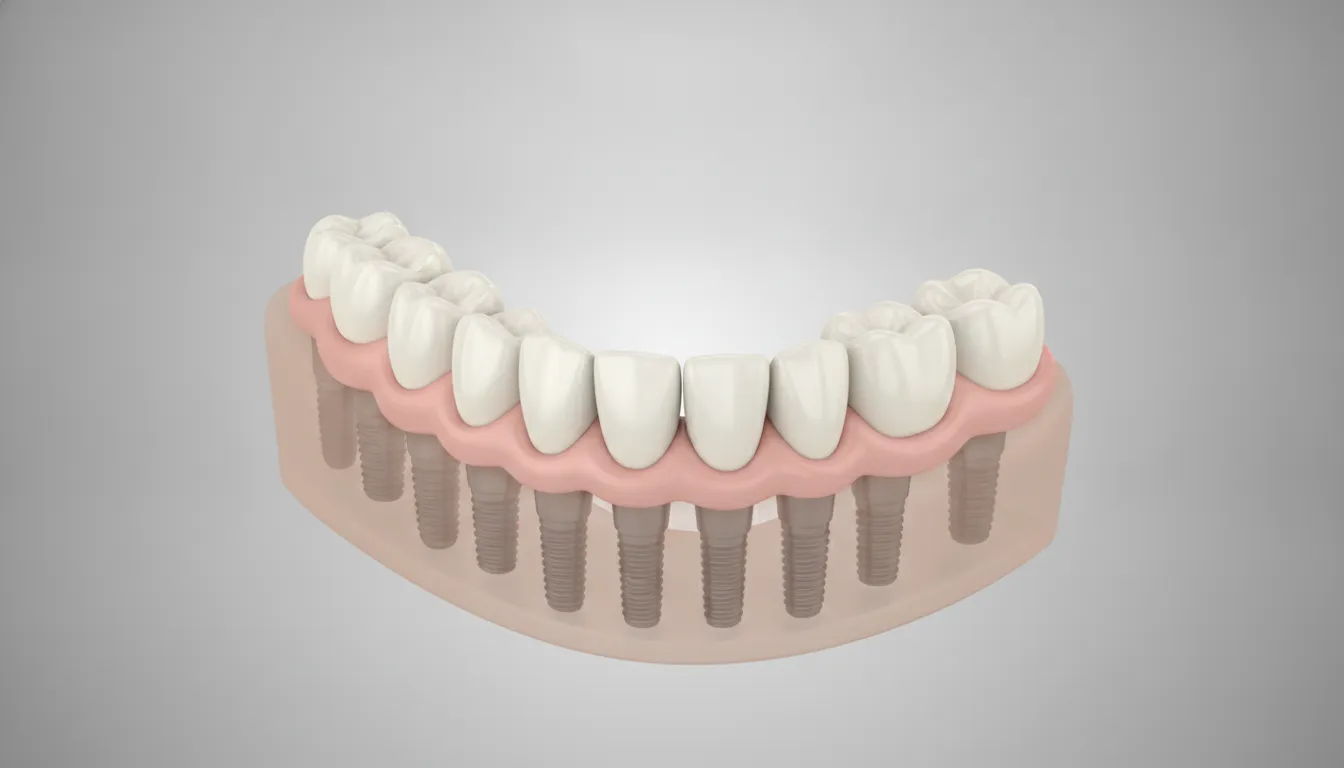
The restorative material and framework design must work together. The team may consider the space available between the arches, the shape of the supporting tissues, bite forces, speech, appearance, and the patient's ability to maintain the restoration. Hygiene access matters as much as appearance. A design that looks appropriate but cannot be cleaned effectively may not be a practical long-term choice.
These decisions are made alongside the surgical plan. A review of prosthetic planning emphasizes that implant treatment should account for both the surgical and restorative components rather than planning them separately (review of prosthetic considerations). Digital X-rays and 3D imaging may help evaluate anatomy, while an in-house laboratory can support custom restoration design and communication between the clinical and technical teams. For patients with several connected restorative needs, a full-mouth reconstruction evaluation may help organize these choices around function, comfort, esthetics, and maintenance.
Research can help frame the discussion, but it cannot select an implant-supported prosthesis for an individual patient. A systematic review compared fixed and removable full-arch designs by examining implant loss and implant success across studies with at least 12 months of clinical follow-up. The review included 11 studies, and the authors judged the overall evidence limited and low quality.
In the populations studied, the estimated cumulative implant loss for fixed prostheses was 0.64% at one year. With a 95% confidence interval of 0.31% to 1.31%, and 1.85% at five years, with a 95% confidence interval of 0.85% to 3.95%. For removable prostheses, the corresponding estimates were 0.71% at one year, with a 95% confidence interval of 0.22% to 2.28%. And 4.45% at five years, with a 95% confidence interval of 2.48% to 7.85%. The one-year results were low and similar, while the five-year findings showed a tendency toward better outcomes with fixed designs. These figures describe groups in the included studies, not a prediction of what will happen to one patient. Read the systematic review on PubMed.
The review also reported peri-implantitis in 10% to 50% of patients restored with implant-supported fixed prostheses. That wide range reinforces why evidence should be interpreted alongside the details of a case, including anatomy, oral health, prosthetic contours, access for cleaning, and the maintenance plan. It does not mean that every fixed restoration carries the same risk, nor does it establish a universal schedule or outcome.
Maintenance remains relevant whichever design is selected. A removable prosthesis may allow a patient or clinician to access areas differently, while a fixed restoration may require specifically planned cleaning techniques and professional evaluation. The practical question is not simply which option performs better on paper. It is whether the design can be kept healthy, comfortable, functional, and serviceable over time. The broader literature also emphasizes coordinating surgical and prosthetic planning around those goals. Review the prosthodontic planning literature before treating study averages as personal expectations.
The right design is not selected from a menu or determined by the implant plan alone. A prosthodontist evaluates how the restoration will work with your anatomy, oral health, daily habits, and long-term goals. The discussion should compare what you need from an implant supported prosthesis with the practical responsibilities that come after treatment.
Diagnostic imaging helps the team understand the available bone, the position of important structures, and the conditions that may affect implant and prosthetic planning. Advanced Cosmetic and Implant Dentistry may use digital X-rays and 3D imaging as part of this evaluation. Existing gum disease, oral hygiene, remaining teeth, and your ability to maintain a healthy environment around the restoration also matter. The practice identifies oral-hygiene commitment as one consideration when evaluating full-arch implant treatment.
Ask how each option may affect speech, chewing, appearance, and confidence in ordinary situations. A removable overdenture can be taken out to improve access for cleaning, while a fixed restoration stays in place and requires a different hygiene approach. Hand strength, dexterity, vision, and your ability to clean beneath or around the prosthesis should be discussed openly. These are practical clinical factors, not minor preferences.
Every design has ongoing responsibilities. Brushing, flossing, professional examinations, and follow-up care may be part of maintenance, but the appropriate schedule should be individualized. Ask how the restoration will be cleaned, what components may need inspection, and how repairs or adjustments would be handled. An in-house laboratory can also support custom restoration design and communication between the clinical and laboratory teams.
Bring questions about materials, removal, cleaning access, speech, and future maintenance to your evaluation. A specialist can use your examination, imaging, goals, and daily capabilities to compare realistic options without assuming that one design fits every patient. For broader context, you can also review the practice's information about fixed All-on-4 restorations before your consultation.
Whether you sleep with a removable overdenture depends on its design, your tissues, and the instructions from your prosthodontist. Some patients may be advised to remove the prosthesis at night to clean it and rest the supporting tissues, while others may receive different guidance. Do not change your routine without discussing fit, comfort, and hygiene with your care team.
The implant itself is a dental replacement for a missing tooth root. It is a metal, screw-like post placed in the jaw, while the prosthetic device is the visible tooth, bridge, or denture attached to it. Together, these parts form an implant-supported restoration. Mayo Clinic explains the distinction between replacing tooth roots and replacing missing teeth.
Neither design is automatically easier for every patient. A removable overdenture can be taken out for access to its underside and attachment components. A fixed restoration stays in place, so cleaning requires tools and techniques that reach around the prosthesis and implants. Dexterity, anatomy, restoration contours, and your willingness to maintain the area all influence the practical choice.
Maintenance is individualized rather than governed by one universal schedule. It may include daily brushing and cleaning around the implants, professional evaluations, and adjustments or repairs as the prosthesis and attachments change over time. Your clinician will set intervals based on your oral health, design, hygiene access, and observed tissue and implant condition.
Choosing between a removable overdenture and a fixed full-arch restoration involves more than preference. A focused conversation can help connect your goals, anatomy, daily cleaning needs, and long-term maintenance plan with an appropriate design. Contact Advanced Cosmetic and Implant Dentistry to discuss your implant-supported tooth-replacement options and learn what questions to bring to a personalized evaluation.
Patients in Hartford, CT, can experience unmatched quality and value by choosing board-certified doctors Avinash Bidra and Xiao Chun Li.
We are affiliated with the following prestigious organizations: