 Searching for the cheapest all on 4 option can make sense when you are comparing a major dental investment. But two quotes with the same procedure name may describe different treatment plans. One may include planning, surgery, a temporary bridge, the final prosthesis, and follow-up; another may list only selected stages or leave important details unclear. The useful comparison is not just the lowest number. It is what care that number covers, how the plan fits your needs, and what may be due later.
Request a consultation to review your options
All-on-4 is a full-arch treatment approach that uses implants to support a set of replacement teeth. A quote can reflect several different parts of care: examination and imaging, treatment planning, implant placement, the teeth worn during healing, the definitive prosthesis, and maintenance or repair visits. Providers may bundle these stages differently. The name of the procedure alone does not tell you what is included.
There can also be differences in the clinical situation being treated. A plan for one person may not match another person’s needs, even if both are asking about a full arch. The number and position of implants, existing dental work, bone and gum conditions, bite, medical history, and the design of the replacement teeth can affect what a clinician recommends. Only an evaluation can establish which approach is appropriate for you.
For that reason, avoid comparing a complete treatment plan with a partial estimate as if they were the same product. Ask each office to explain its recommendation in writing and identify the stages included, any assumptions, and items that could change after examination.
It also helps to confirm the basic unit being priced before you compare totals. Ask whether each number is for one arch or two, and whether it covers upper teeth, lower teeth, or both. Check whether the estimate assumes that existing teeth will be removed, or whether it is based on a different starting point. If you are looking at a monthly payment rather than a treatment total, request the full amount and the terms behind that payment. A brief clarification can reveal that two seemingly similar quotes are addressing different needs.
A written estimate is easier to evaluate when it separates the main phases of care. The exact arrangement varies, but use this checklist to understand what you are being quoted for:
A low quote is not automatically incomplete, and a higher quote is not automatically better. The point is to check that you understand the same scope before drawing a conclusion. If a line item is unclear, ask the office to explain it in plain language rather than relying on a label.
One useful step is to request an itemized estimate with an included, excluded, or not-yet-determined note beside each stage. For example, a line that says “restoration” may not tell you whether it refers to the temporary bridge, the definitive prosthesis, or both. Ask for the name of the restoration and when it is expected to be used. If an item depends on examination findings, ask what could trigger it and how the office will discuss any change before treatment proceeds. That gives you a more useful basis for planning without asking the provider to predict every clinical detail in advance.
The teeth used during healing and the final prosthesis serve different purposes in a staged treatment plan. In an appropriate plan, an acrylic-resin temporary bridge may be used during healing. It can allow the team to assess fit, appearance, speech, bite, and comfort, then make adjustments and customize the design before moving to a more definitive prosthesis, such as zirconia when that material is suitable.
This sequence matters when comparing prices. One proposal may include the temporary bridge and the later definitive bridge, while another may not make the stages clear. Ask what you will wear during healing, what the final teeth will be made from, whether adjustments are included, and whether the cost of the definitive prosthesis is part of the quoted total. A treatment plan should explain the timing and purpose of each stage, rather than making the temporary and final teeth sound interchangeable.
For many appropriate full-arch plans, using an acrylic-resin temporary bridge during healing, then adjusting and customizing the design before the definitive prosthesis, is an established staged approach. The temporary is not simply a lower-cost substitute for the final teeth; it serves a distinct role while the team evaluates fit and function. When zirconia is clinically suitable, moving to a definitive zirconia prosthesis after that stage can reflect the planned progression of care. This is not a guarantee that every patient follows the same timeline or receives the same material. The clinician must determine what is appropriate for your situation.
Including this stage in the written plan can also help protect your financial investment. It makes clear what is being provided during healing, what adjustments and customization are planned, and what final restoration the total is intended to cover. You can then ask whether the estimate includes the entire sequence, rather than discovering later that a quoted bridge covered only an interim stage. This does not guarantee a particular result or eliminate possible changes; it helps you understand what you are paying for and how the stages fit together.
Customization before the final restoration can help align the planned appearance and function with the patient’s needs. The specific materials, timing, and design should be based on a clinical assessment; zirconia or any other material is not automatically right for every person. A clear proposal explains the reasoning and what is included. For more detail about the treatment approach, see the practice’s All-on-4 dental implant service.
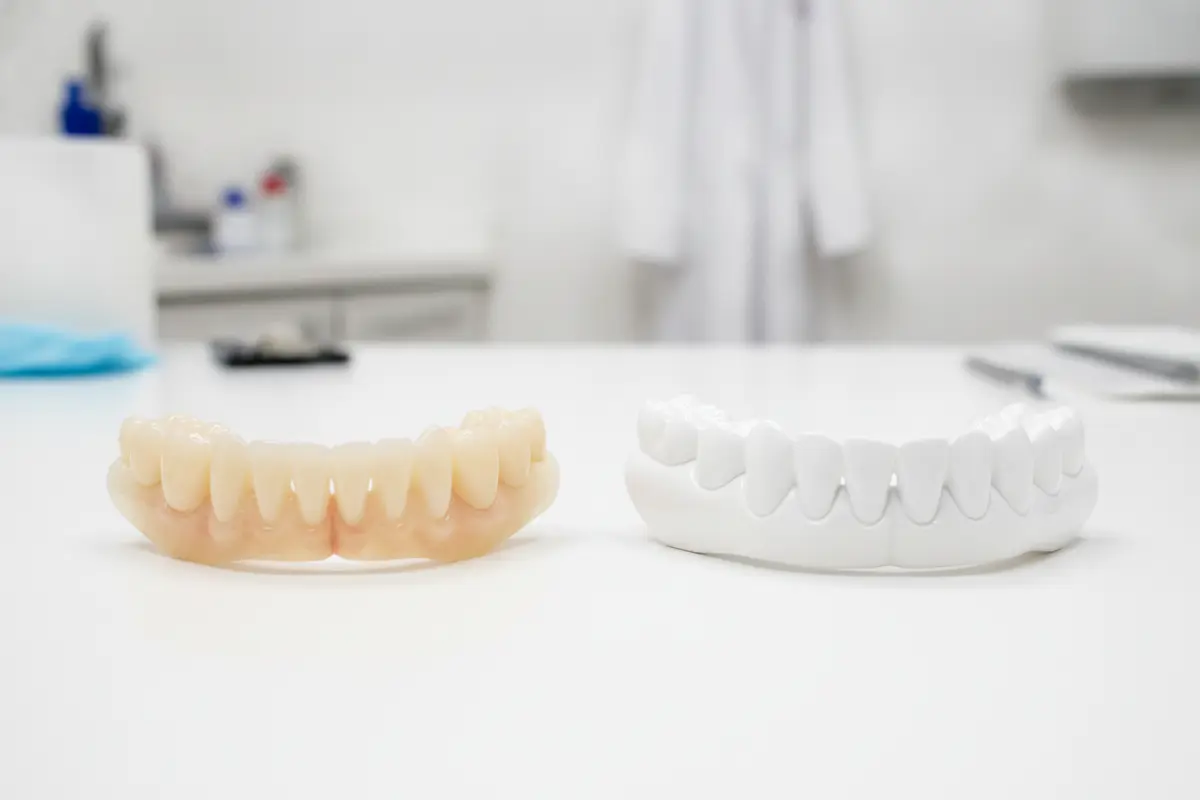
The phrase “full-arch teeth” does not identify the material, construction, or design of the prosthesis. These choices can affect appearance, feel, maintenance needs, repair approach, and the overall cost of care. Ask the clinician to name the proposed material for both the temporary and definitive teeth, explain why it is recommended for your situation, and identify whether the estimate covers fabrication and delivery.
Also ask what the quote means by “final.” Does it refer to the definitive prosthesis after healing, or to a temporary set delivered around the time of surgery? Does the price include one arch or both? Are both upper and lower arches being planned, or is the estimate for only one? These simple questions can prevent confusion when brochures or estimates use similar terms for different stages.
Materials should be considered in the context of the whole plan, not as a stand-alone ranking. A more costly material is not necessarily the best choice for every patient, and a lower-cost option is not automatically unsuitable. Your clinician should explain the trade-offs relevant to your bite, anatomy, preferences, and maintenance expectations.
Ask how the proposed design will be cleaned and what routine care it requires. A fixed full-arch restoration can still need regular professional assessment and careful home care. Understanding the shape and access for cleaning is part of comparing designs, not an extra detail to consider only after delivery. If a proposal names a material but says little about design or maintenance, request a plain-language explanation of how those choices relate to your daily routine and any concerns specific to your mouth.
Full-arch implant care is a process, not just a single procedure. Planning helps the clinician assess your mouth and map out a suitable approach. Follow-up gives the care team opportunities to evaluate healing, address fit and bite concerns, and provide maintenance guidance. Ask who is responsible for each stage and how you can reach the practice if something changes after treatment.
When you compare plans, look for a sequence you can understand: evaluation, planning, surgical treatment if appropriate, a temporary restoration when planned, healing and adjustment, and the definitive prosthesis. The exact timing and sequence depend on the clinical plan. Do not assume that “teeth in a day” means every patient receives the same final material or completes every stage on the same day.
Some practices provide coordinated surgical and restorative care in one setting; others arrange care across providers. Neither description alone determines quality. Ask who plans the prosthesis, who places implants, who makes the teeth, and who provides follow-up. You can read about the clinicians and their training on the practice’s doctors page and learn more about its practice and care approach.
Before accepting an estimate, map the appointment sequence and ask which visits are included in the quoted fee. For instance, does the estimate include a review after the temporary bridge is placed? Are bite or fit adjustments part of the planned healing stage? How is the transition to the definitive prosthesis scheduled? A short written outline of these checkpoints makes it easier to compare care plans, and it gives you a practical list of items to clarify if a visit or service is not described.
The American Dental Association describes itself as a source for clinical guidelines and oral health research. Its clinical and oral-health resources can provide general background, while a dental professional must assess your individual treatment needs.
Request written estimates from the providers you are considering. Put the same questions next to each proposal, then mark whether each item is included, excluded, or needs clarification. This is more useful than comparing only the bottom-line number.
Keep a copy of each plan and write down the answers you receive. If a provider cannot confirm a detail until after an examination, ask when you will receive the updated plan and whether you will have a chance to review it before proceeding.
You can make the comparison more concrete by creating one row per stage and writing the provider’s wording beside it. For example, if one quote includes “provisional teeth” and another lists “temporary bridge,” do not assume the phrases describe the same service. Ask each office what is delivered, when it is delivered, and whether the final prosthesis is included. Then note the answers in the same terms: included, separate, or undecided pending examination. This small exercise helps you spot gaps without deciding that one provider is better based on a label or a single total.
Budgeting may also involve financing, but financing does not make two treatment plans clinically equivalent. Review the total amount financed, any terms or fees, and your obligations with the lender. The practice’s insurance and financing information is one place to begin asking about available payment arrangements.
Explore dental implant treatment options
Use a consultation to understand the recommendation, not just to collect a number. Consider asking:
You can also ask whether other treatment paths should be considered. Depending on a person’s needs, options may include a removable denture, an implant-supported removable restoration, or another fixed full-arch plan. These are not interchangeable solutions. Compare what each option involves, the care it requires, and whether it fits your goals. Learn about denture options or the broader range of full-mouth reconstruction care as topics to discuss with your dental team.

Long-term value is not a promise that a particular treatment will last for a certain number of years. It is a way to weigh the full scope of the proposed care against your needs, preferences, maintenance responsibilities, and budget. Consider whether you understand the treatment stages, what materials are planned, how the prosthesis can be maintained, and what support is available if repair or adjustment is needed.
Be cautious about comparing lifetime claims or guarantees without reading the terms. Ask what the provider means, what conditions apply, and what costs remain your responsibility. No quote can replace an individualized clinical evaluation, and no single price tells you whether a plan is appropriate for you.
Think about the practical cost of uncertainty as well as the stated total. If the estimate leaves the final prosthesis or adjustment visits unclear, you may not yet have enough information to compare the full plan. This is a reason to ask questions, not a reason to assume that a future charge will occur. A careful written explanation can show which costs are fixed for the proposed scope and which depend on findings or choices made later.
It can be useful to bring a trusted person to a consultation or take notes as you go. Dental treatment plans involve several stages, and it is easy to remember the headline price but forget whether a bridge, follow-up visit, or adjustment was included. After the visit, review your notes against the written proposal and send a short list of any remaining questions. Taking time to understand the plan is part of evaluating value; it does not require making an immediate decision.
If you are exploring cost specifically, review the practice’s dental implant cost information alongside a personalized estimate. For a broader overview of implant care, the practice also describes its dental services. These resources can help you prepare questions, but they cannot establish your individual treatment needs.
Review dental implant care options
Bring your questions to a consultation
Not necessarily. A lower estimate may reflect a different scope, material, or bundle of services, or it may be a complete plan priced differently. Ask for the details in writing and compare like with like before deciding.
Ask whether it is included, what type of temporary restoration is planned, and whether adjustments during healing are covered. A staged plan may use an acrylic-resin temporary bridge while healing, followed by customization and a definitive prosthesis when clinically appropriate. The proposal should state what applies to you.
No material is automatically right for every patient. Ask your clinician to explain the proposed material and design, the reasons for that choice, and any alternatives that make sense for your clinical situation.
Only after you confirm what each estimate covers. Check whether the proposal is for the upper arch, lower arch, or both, and whether the surgical and prosthetic stages are included for each arch.
Ask for a consultation and a written, itemized explanation of the recommended plan. Bring other estimates if you have them, and ask the clinician to clarify differences rather than choosing from headline prices alone.
A careful comparison starts with a clear treatment plan, not a price alone. If you are considering All-on-4, ask what is included from planning through the final prosthesis and follow-up, and make sure the recommendation addresses your own needs.
Schedule a consultation to discuss your treatment plan
Understanding the scope, materials, stages, and maintenance in each proposal can help you make a more informed decision about care and cost.
Patients in Hartford, CT, can experience unmatched quality and value by choosing board-certified doctors Avinash Bidra and Xiao Chun Li.
We are affiliated with the following prestigious organizations: