Surgical dental implants can replace missing teeth, but surgery is only one part of the process. A sound plan considers your health, bone and gum conditions, the position of nearby structures, the restoration that will attach to the implants, and how healing will be monitored. If you are comparing options or dental financing, first understand what care is being proposed and how the full sequence fits together. This guide outlines the decisions to discuss before committing to treatment.
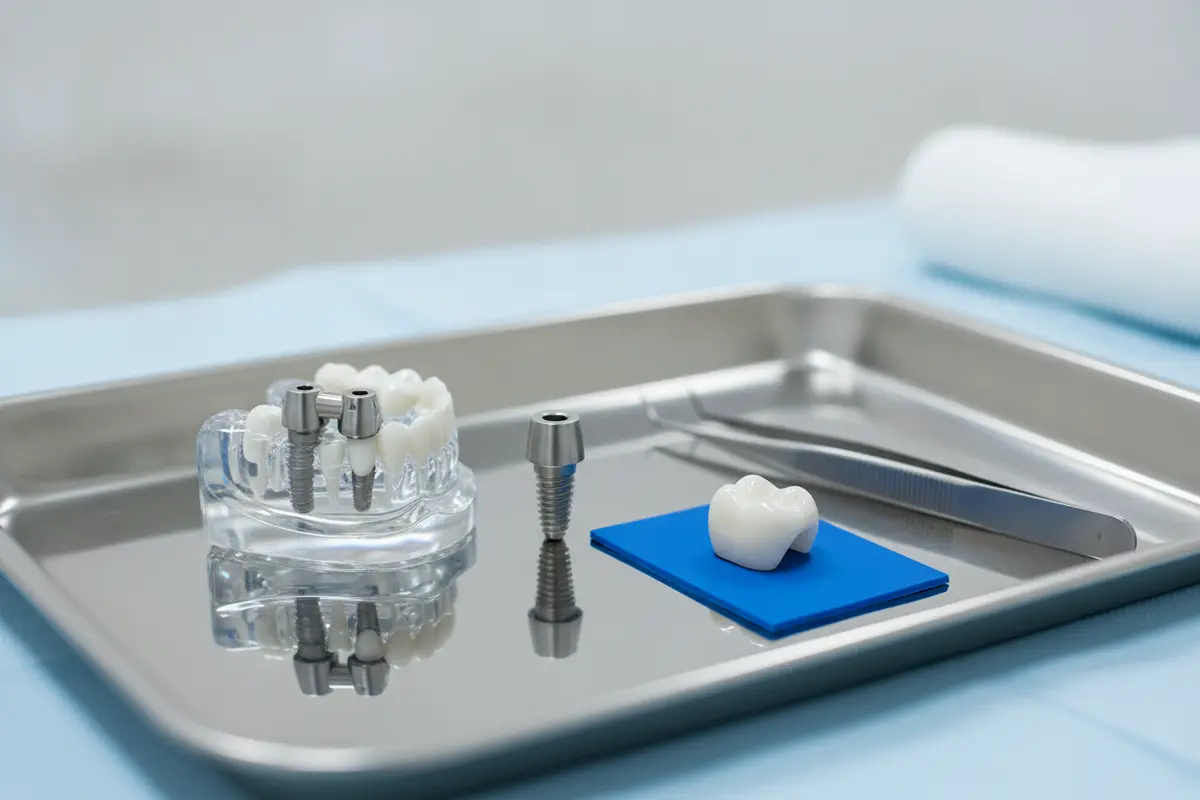
A dental implant is a small fixture placed in the jawbone to support a replacement tooth or a larger restoration. The visible tooth is not the implant itself. A connector, often called an abutment, joins the implant to a crown, bridge, or denture. Those parts work together, and treatment planning should address them as a unit.
Treatment may involve one implant or several implants supporting a full-arch restoration. Some patients need preparatory care, such as treatment for gum disease or a bone graft. Others may be able to proceed without those steps. The right sequence depends on examination and imaging rather than a general checklist or a promise based on another patient's experience.
Patients often use “surgery” to mean the entire process. In practice, planning, placement, healing, restoration, and maintenance are connected but distinct phases. Your dentist should explain which parts apply to you, who will perform each part, and how the final restoration will be designed. For an overview of the practice's dental implant care, use it to prepare questions, not as a substitute for an individual evaluation.
An evaluation starts with your goals and medical and dental history. Tell the clinician about medications, health conditions, tobacco use, prior dental treatment, and concerns about surgery or healing. Do not stop or change prescribed medication without guidance from the prescribing clinician. A complete history helps the team identify issues that may affect planning, comfort, or timing.
The dental examination looks at teeth, gums, bite, and available space for a restoration. Imaging helps assess bone dimensions and the relationship of proposed implant sites to nearby anatomy. A digital scan or impressions may help plan how the eventual teeth should fit and function. Ask what each image contributes and whether additional records are needed before a recommendation can be made.
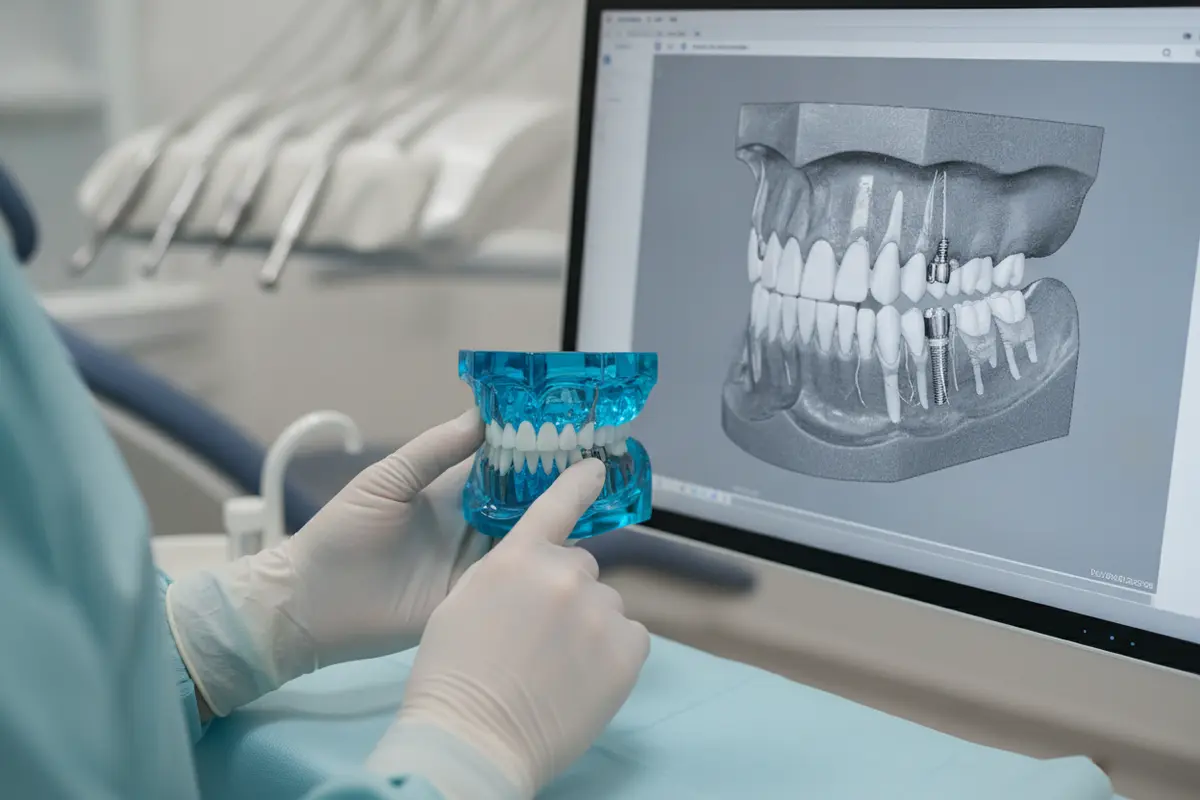
Being told that implants may be possible is not the same as having a complete plan. Ask how the clinician reached the recommendation, what alternatives exist, and whether preliminary treatment is needed. For patients considering extensive reconstruction, the practice's information about full-mouth reconstruction can help frame questions about how multiple teeth and bite concerns are considered together.
Bring a current medication list, relevant medical history, and any dental records or imaging you already have. Write down what you hope to change: a missing front tooth, difficulty chewing, an unstable denture, or several failing teeth may lead to different conversations. Also list questions about appointments, temporary teeth, recovery, cost, and maintenance. A written list is useful because consultations can cover many details quickly.
If another clinician has recommended an implant, ask for copies of the findings that support that recommendation. A second opinion is more useful when the reviewing clinician can see the same images and treatment outline. You do not need to arrive with a decision already made; the purpose of the evaluation is to understand options and limits.
A useful plan connects surgical steps to the planned restoration. It should clarify the number and location of implants, the type of teeth or prosthesis expected, whether temporary teeth are anticipated, and how healing will be assessed before the final restoration is delivered. Because treatment spans multiple visits, compare the complete expected course rather than only the initial procedure.
Request a written estimate organized by phase. That makes it easier to see which costs relate to diagnosis, surgery, temporary teeth, final prosthetics, and maintenance. It also gives you a concrete document to discuss with the practice or a financing provider. If an estimate uses broad labels, ask what each item includes and whether laboratory work, follow-up, or adjustments are covered.
For full-arch treatment, ask how the planned prosthesis relates to your bite and how it can be cleaned and maintained. The practice's pages on All-on-4 dental implants and denture options can help you identify topics to raise, but only an individual assessment can determine what fits your case.
The clinician reviews examination findings and imaging, confirms proposed sites, and discusses anesthesia, aftercare, and the restoration plan. If another dental or medical issue needs attention first, that may affect timing. Ask for written instructions and a clear way to contact the care team with concerns. Clarify whether you need to arrange transportation or time away from work, especially if sedation is being considered.
During placement, the clinician creates an opening in the jawbone and positions the implant. The exact procedure depends on the site and treatment plan. Some patients receive a temporary tooth or provisional restoration; others leave the site without a tooth attached to the implant while healing proceeds. Ask what you should expect on the day, what foods or activities may need adjustment, and which instructions are specific to your surgery.
Over time, bone can integrate with the implant surface. The team schedules follow-up to examine the site and decide when it is appropriate to proceed. Healing time varies. Avoid assuming that a fixed calendar applies to every patient, and follow the instructions you receive. A surgical guide may help translate a digital plan to placement, depending on the case and clinician's approach; it does not replace diagnosis, surgical judgment, or follow-up. A source titled Surgical Guide For Dental Implants discusses guides in relation to placement. Ask your clinician whether one is planned and what purpose it serves in your treatment.
Once the implant and surrounding tissues are ready, the restorative phase focuses on fit, appearance, bite, and cleaning access. The practice may use its in-house laboratory as part of care, but timing and design depend on your case. Regular professional reviews and home care remain important after the restoration is placed. Ask how small adjustments will be handled and whom to call if the bite feels uneven or a restoration becomes uncomfortable.
The table is a discussion aid, not a recommendation. It shows why a quote or timeline cannot be compared fairly without knowing the restoration and preparatory work included. A clinician must determine the appropriate pathway after assessing your situation.
| Pathway | What it may involve | Planning point | Question to ask |
|---|---|---|---|
| Single-tooth replacement | One implant supporting a crown, with timing based on the site and healing. | Temporary tooth and final crown may be separate phases. | Will the tooth be temporarily replaced while the implant heals? |
| Several missing teeth | Multiple implants may support individual crowns or a bridge, depending on design. | Cleaning access and bite need to be considered across the span. | How will the design affect cleaning and chewing? |
| Full-arch restoration | Several implants support a fixed or removable full-arch prosthesis. | Temporary and final prostheses may differ. | What is planned for each phase and how is it maintained? |
| Preparation before placement | Some cases include treatment of gum or bone conditions before surgery. | Extra steps can affect sequencing and the estimate. | What needs to happen first, and how could that change timing? |
Dental financing is a separate decision from clinical suitability. First understand the recommended treatment, then evaluate how you might pay for it. A financing offer cannot establish that a procedure is appropriate, and affordability should not be confused with clinical advice. If you are unsure about the treatment itself, resolve those questions before signing a payment agreement.
Request an itemized estimate identifying what is included, what may be additional, and when payments are due. For a multi-phase plan, ask how the estimate handles changes in sequence, a revised temporary restoration, or the need for additional care. Compare like with like: one estimate may include a final prosthesis and follow-up while another may list only implant placement. The practice's implant cost information can be a starting point for questions, not a personalized quote.
If financing options are available, review the agreement directly with the provider. Compare the total repayment amount, interest or promotional terms, fees, payment schedule, and what happens if treatment timing changes. Approval and terms are determined by the financing provider; do not assume a particular plan or rate will be available. For a promotional period, find out what happens when it ends and whether deferred interest or other conditions apply. Ask for the terms in writing.
A lower monthly payment can extend the repayment period and change the overall amount paid. Consider whether the schedule remains manageable if appointments shift or a separate dental need arises. Do not base a decision solely on a promotional headline or a verbal summary. Read the agreement, identify who to contact about account questions, and keep copies of the estimate and financing terms together.
Before choosing, put the important details side by side. For example, suppose two proposals describe the same broad goal but differ in what the quoted amount includes. Proposal A lists surgery and a temporary restoration; Proposal B lists surgery, the final prosthesis, and scheduled reviews. The monthly payment alone cannot tell you which is the better comparison. Ask each office to identify included services and possible additional charges, then compare the expected total and payment terms.
For current practice information, review the insurance and financing page. Ask which options are currently offered and verify eligibility and contract terms with the financing provider. A written estimate should match the treatment discussed with the clinician; a low headline amount may not represent the full course if services or restorations are excluded.
Healing is individual. The condition of the site, extent of surgery, general health, and adherence to postoperative instructions can all matter. Your clinician should explain expected symptoms and what would be a reason to call. If you have a concern after surgery, contact your treating team rather than relying on generalized online advice. Before leaving, make sure you know which number or channel to use and whether the practice has instructions for after-hours concerns.
Follow-up is not an optional extra. It gives the clinician a chance to check the surgical site, review comfort and function, and decide whether the next step should proceed. Keep appointments and tell the team about changes in comfort, swelling, bite, or the way a temporary restoration feels. Do not adjust or repair a restoration at home unless your clinician instructs you to do so.
Discuss home care before the restoration is delivered. Ask what tools are suitable for cleaning around the implant and beneath a bridge, how often professional maintenance is recommended, and whether a night guard or other support is appropriate for your bite. The practice's information about periodontal care and routine dental cleanings can support a broader maintenance conversation. A restoration that is easy to clean in theory still needs a practical daily routine you can follow.
Look for a clear explanation of who performs each phase and how surgical and restorative planning are coordinated. Ask about the clinician's training and experience with the type of reconstruction being proposed. You can review the practice's doctor information and its description of the practice and its approach as background, then ask questions about the care relevant to you.
A good consultation leaves room for questions. The plan should address alternatives, limitations, foreseeable risks, and follow-up—not just the day of surgery. Ask who will be your point of contact throughout the process and how the team coordinates if surgical and restorative visits occur at different times. If you want a second opinion, bring copies of relevant records and imaging when available, so the next clinician can evaluate the same information.
These questions can make comparisons more specific:
If anxiety is part of your decision, say so directly. Ask about comfort measures, whether sedation is an option in your situation, what preparation is involved, and what recovery arrangements you would need. The practice provides information about IV sedation, but suitability must be discussed with a clinician.
Implant placement may happen in a surgical appointment, but evaluation, healing, restorative appointments, and follow-up are separate parts of care. Some cases include a temporary restoration; others do not. Ask which steps are planned for you and how the schedule depends on healing.
No single answer applies to everyone. The clinician uses examination and imaging to assess the site and decide whether grafting or another preparatory step is recommended. Ask what finding supports the recommendation and how it affects the overall sequence.
The schedule depends on the site, procedure, healing, and restoration plan. Your clinician can explain the expected sequence and what might affect timing, but an exact timeline cannot be guaranteed in advance. Ask which milestones must be met before the next phase begins.
Availability depends on arrangements offered and your approval by a financing provider. Ask for current terms, compare the total repayment cost, and confirm what treatment the estimate covers. Keep the financing decision separate from the clinical decision about what treatment is suitable.
Tell the team what concerns you. Ask what comfort and sedation options may be suitable, how they affect preparation and recovery, and what instructions apply. A clinician can explain options in light of your health history and planned procedure.
Surgical dental implants involve decisions about both surgery and the teeth that follow. A careful discussion of diagnosis, sequence, restoration, follow-up, and financing can help you understand what is being proposed before you decide. To discuss your situation, contact Advanced Cosmetic and Implant Dentistry about an evaluation.
Patients in Hartford, CT, can experience unmatched quality and value by choosing board-certified doctors Avinash Bidra and Xiao Chun Li.
We are affiliated with the following prestigious organizations: